How Long Do Dental Implants Last?
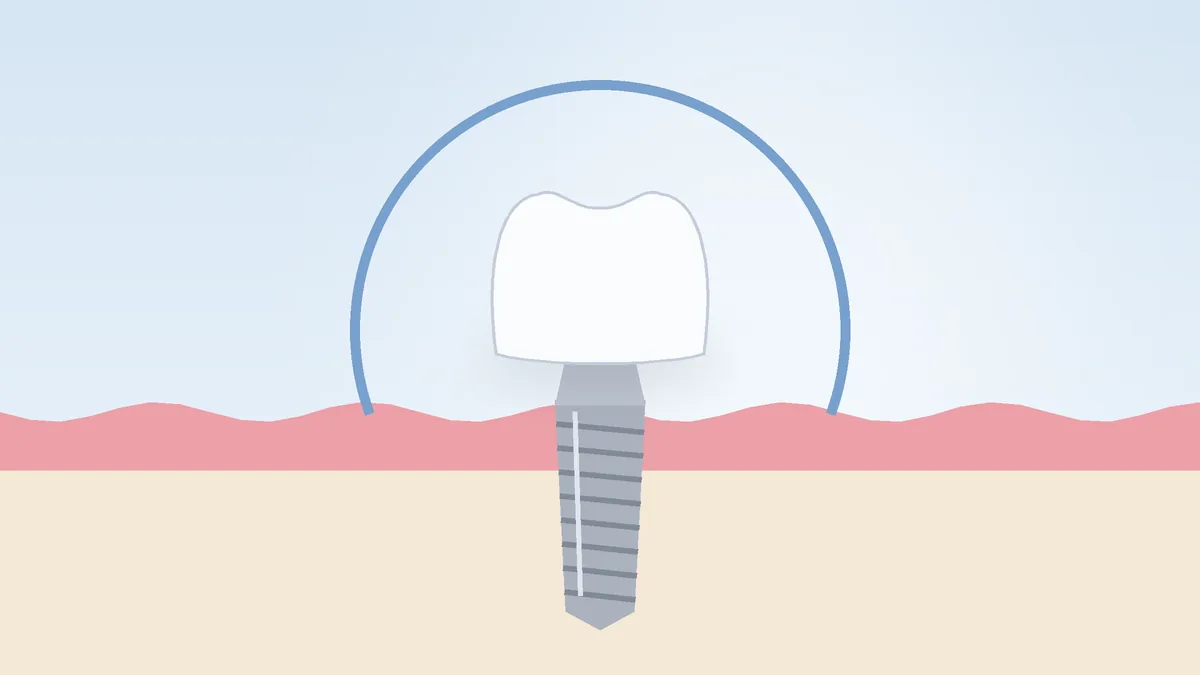
How long do dental implants last? In long-term research, roughly 95 in 100 implants are still in the jaw 10 years or more after placement, and studies following patients for 20 years still find most implants in function. No study measures a fixed lifespan in years, though. Bone health, gum care, smoking and maintenance all shape your own result.
How Long Do Dental Implants Last in Long-Term Studies?
Researchers describe implant outcomes with a few distinct measures:
- Survival: the implant is still in the jaw and in use, even if it has had problems.
- Success: a stricter test. The implant must also meet health criteria, such as limited bone loss and no ongoing infection.
- Failure: the implant has been lost or removed.
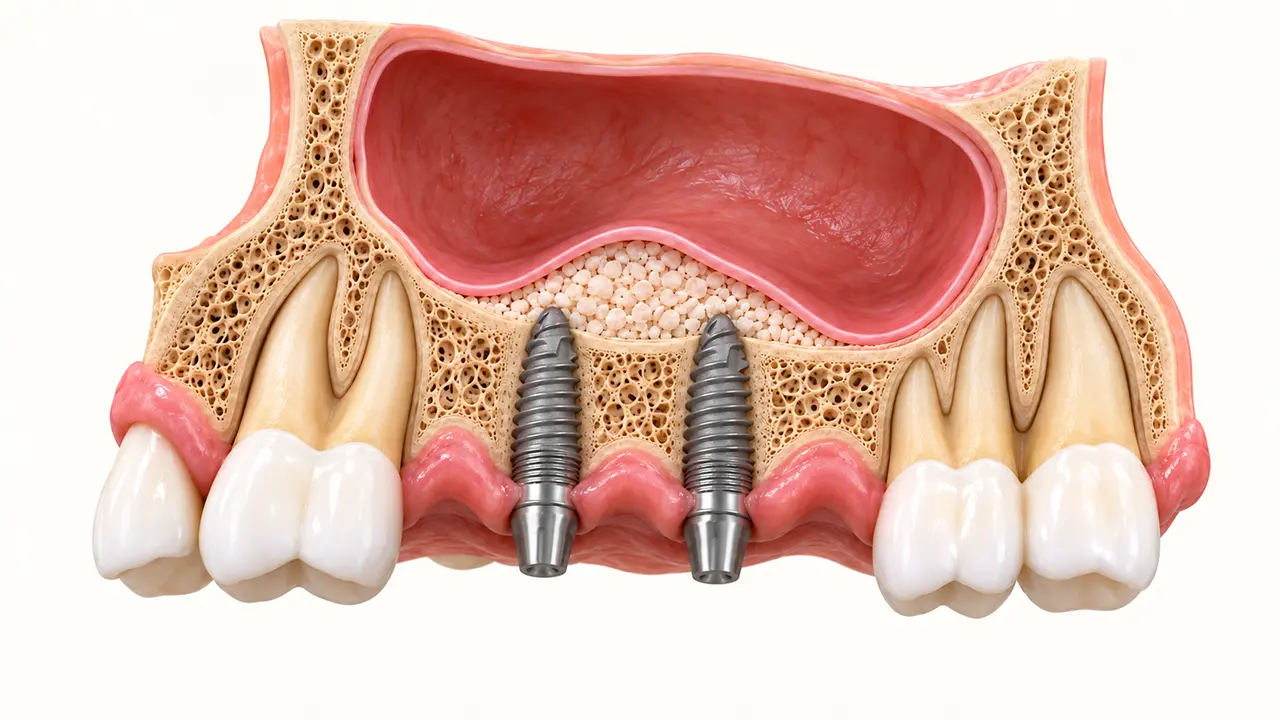
These figures describe the implant post (the fixture) in the bone. The crown screwed or cemented on top is a separate part with its own, lower survival figures, covered in our guide to how long implant crowns last.
Two points stand out. First, the adjusted Howe estimate is lower because it accounts for patients who stopped attending follow-up visits; the authors call it the more realistic figure. Second, survival is not the same as health. The 2026 review found that success rates were lower than survival and that peri-implant disease varied widely, so an implant can stay in place while the tissue around it is not ideal.
How long do dental implants last for an individual patient?
Most implants in healthy, well-maintained mouths last well beyond 10 years, and some last decades. A small share fail early, and others develop gum or bone problems later. The table shows group averages from monitored patients, not a promise for any single implant.
What Are Most Dental Implants Made Of?
Most implants placed today are made of titanium or a titanium alloy. The 10-year Buser study above followed titanium implants with a roughened (sandblasted and acid-etched) surface, the type of surface that bone bonds to during osseointegration. Ceramic zirconia implants are an alternative with much shorter follow-up; our comparison of titanium vs zirconia implants explains the trade-offs.
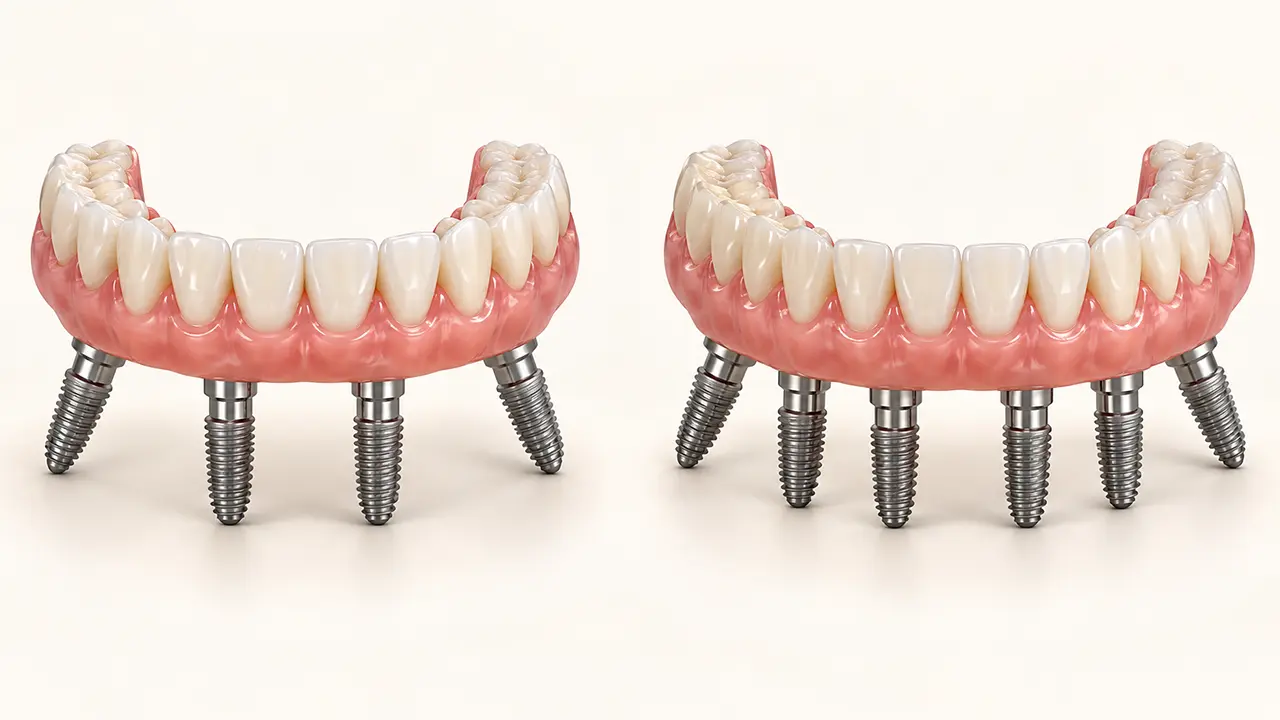
Full-arch treatments, where four implants carry a whole row of teeth, are studied separately. See how long All-on-4 implants last for that evidence.
What Affects How Long an Implant Lasts?
- Smoking. Across 107 studies, implants failed in 6.35% of smokers versus 3.18% of non-smokers. Smokers also had more infections after surgery and more bone loss, although the studies did not control for every confounding factor.
- Gum disease history. In a Swedish study of patients examined 9 years after treatment, 45% had some degree of peri-implantitis and 14.5% had moderate or severe disease. A history of periodontitis raised the odds of the more serious form.
- Age. In the adjusted Howe analysis, patients aged 65 or older had lower 10-year survival (91.5%).
- Implant surface. In a review of implants supporting bridges, 5-year survival rose from 95.6% to 97.2% when older smooth (machined) implants were left out and only rough-surface implants were counted. The 20-year Chappuis data also come from an older surface type.
- Grinding and bite forces. Clenching and grinding load the crown, screw and surrounding bone. Dentists often protect implants in people who grind with a night guard.
- Maintenance. Regular professional cleaning and checkups let problems be found while they are still treatable.
Common Dental Implant Complications
- Early failure. Sometimes the bone does not bond to the implant during healing. This usually shows up in the first months, before or soon after the crown is fitted.
- Peri-implant mucositis. Gum inflammation around the implant without bone loss. It is reversible with better cleaning and professional care.
- Peri-implantitis. Inflammation with progressive bone loss around the implant. The 2026 review reported it at 10.8% of implants on average, with a range of 3.0% to 39.9% across studies.
- Bone loss. A small amount of bone remodeling is expected; reviews report about 1.3 mm on average over 10 or more years.
- Prosthetic problems. Loose screws, chipped porcelain or a loose crown affect the parts on top of the implant and are usually fixable without removing the implant.
How to Make Your Implant Last Longer
- Clean around the implant every day. Brush twice daily and use floss, interdental brushes or a water flosser where the crown meets the gum.
- Stop smoking, ideally before surgery and for good afterwards.
- Keep professional cleanings and checkups, including X-rays when your dentist recommends them.
- Manage gum disease in your remaining natural teeth.
- Wear a night guard if you grind or clench.
- Avoid biting very hard objects, such as ice or bottle caps.
- Report changes early. A loose crown or bleeding gum is easier to deal with before it progresses.
Signs Your Implant Needs Attention
- bleeding, swelling or pus around the implant
- gum receding and exposing metal
- persistent pain or discomfort when chewing
- a crown that wobbles or clicks
- the implant itself feeling mobile
- a bad taste or smell around the implant
A crown that moves is often only a loose screw. An implant post that moves in the bone is more serious and needs prompt assessment.
What Happens if an Implant Fails?
The answer depends on which part is affected:
- Crown or screw problems are usually solved by retightening the screw or replacing the crown, leaving the implant in place.
- Early peri-implantitis is managed with professional cleaning and closer follow-up; advanced cases may need surgery around the implant.
- A failed implant is removed. Once the site heals, a new implant can often be placed, sometimes after bone grafting to rebuild lost bone.
Dental Implants at Novexdent
At the Novexdent dental clinic in Istanbul, implant treatment uses titanium implants from Straumann and Medentika (a Straumann Group company), planned with 3D jaw scans. The standard protocol has two visits: implant placement first, then three to six months of healing at home before the abutment and permanent crown are fitted. Immediate loading is offered only in selected cases with enough bone. Implants typically come with a lifetime manufacturer warranty, which is a commercial guarantee rather than a prediction of how long an implant will last. Our page on dental implants turkey explains the process, and a free online consultation lets the dentists review your X-rays first.
Frequently Asked Questions
Can a dental implant last a lifetime?
It can, especially when it is placed in healthy bone and maintained well. But studies report survival rates, not lifetimes. Plan for regular maintenance, and expect the crown on top to need replacing at some point.
Do implants last as long in older patients?
Mostly yes, but risk is slightly higher. One analysis found 10-year survival of 91.5% in people aged 65 or older, compared with 93.2% across all ages in the same adjusted model. Age alone does not rule out implants.
Do zirconia implants last as long as titanium implants?
Up to about 5 years, the evidence suggests similar results: one review estimated 97.2% survival for zirconia implants after 5 years of loading, and a 2026 comparison found no significant survival difference at 5 years or more. Long-term zirconia data remain limited.
Can I get dental implants if I smoke?
Often yes, but smoking roughly doubled the crude implant failure rate in a large review and increases infection risk. Stopping, or at least cutting down around surgery, improves your odds.
How long do dental implants last compared with bridges or dentures?
Direct comparisons are limited. What the research does show is that implants have high long-term survival, while the teeth or crowns attached to them are more likely to need repair or replacement than the implants themselves.
References
- Howe MS, Keys W, Richards D. Long-term (10-year) dental implant survival: A systematic review and sensitivity meta-analysis. J Dent. 2019;84:9–21. doi:10.1016/j.jdent.2019.03.008
- Moraschini V, Poubel LA, Ferreira VF, Barboza Edos S. Evaluation of survival and success rates of dental implants reported in longitudinal studies with a follow-up period of at least 10 years: a systematic review. Int J Oral Maxillofac Surg. 2015;44(3):377–388. doi:10.1016/j.ijom.2014.10.023
- Moraschini V, Mikulás K, Shibli JA, et al. Ten years and beyond: Long-term dental implant survival, success, and biological health. A systematic review and meta-analysis. Periodontol 2000. 2026 (online ahead of print). doi:10.1111/prd.70098
- Jung RE, Zembic A, Pjetursson BE, Zwahlen M, Thoma DS. Systematic review of the survival rate and the incidence of biological, technical, and aesthetic complications of single crowns on implants reported in longitudinal studies with a mean follow-up of 5 years. Clin Oral Implants Res. 2012;23(Suppl 6):2–21. doi:10.1111/j.1600-0501.2012.02547.x
- Buser D, Janner SF, Wittneben JG, Brägger U, Ramseier CA, Salvi GE. 10-year survival and success rates of 511 titanium implants with a sandblasted and acid-etched surface: a retrospective study in 303 partially edentulous patients. Clin Implant Dent Relat Res. 2012;14(6):839–851. doi:10.1111/j.1708-8208.2012.00456.x
- Chappuis V, Buser R, Brägger U, Bornstein MM, Salvi GE, Buser D. Long-term outcomes of dental implants with a titanium plasma-sprayed surface: a 20-year prospective case series study in partially edentulous patients. Clin Implant Dent Relat Res. 2013;15(6):780–790. doi:10.1111/cid.12056
- Chrcanovic BR, Albrektsson T, Wennerberg A. Smoking and dental implants: A systematic review and meta-analysis. J Dent. 2015;43(5):487–498. doi:10.1016/j.jdent.2015.03.003
- Pjetursson BE, Thoma D, Jung R, Zwahlen M, Zembic A. A systematic review of the survival and complication rates of implant-supported fixed dental prostheses (FDPs) after a mean observation period of at least 5 years. Clin Oral Implants Res. 2012;23(Suppl 6):22–38. doi:10.1111/j.1600-0501.2012.02546.x
- Derks J, Schaller D, Håkansson J, Wennström JL, Tomasi C, Berglundh T. Effectiveness of implant therapy analyzed in a Swedish population: prevalence of peri-implantitis. J Dent Res. 2016;95(1):43–49. doi:10.1177/0022034515608832
- Roehling S, Gahlert M, Bacevic M, Woelfler H, Laleman I. Clinical and radiographic outcomes of zirconia dental implants: A systematic review and meta-analysis. Clin Oral Implants Res. 2023;34(Suppl 26):112–124. doi:10.1111/clr.14133
- Pachiou A, Delgado-Ruiz R, Schnurr E, Kim DM, Romanos GE, Balmer M. Survival and clinical performance of zirconia compared to titanium implants: a systematic review and meta-analysis. Int J Oral Maxillofac Implants. 2026 (online ahead of print). doi:10.11607/jomi.11788
LATEST ARTICLES
Beyond the Smile