How Long Do Implant Crowns Last?
How long do implant crowns last? A large review estimated that about 96 in 100 single crowns on implants were still in use after 5 years and about 89 in 100 after 10 years. The crown usually needs attention before the implant beneath it does. Loose screws, chipped porcelain and grinding are the usual reasons.
Why the Crown and the Implant Have Different Lifespans
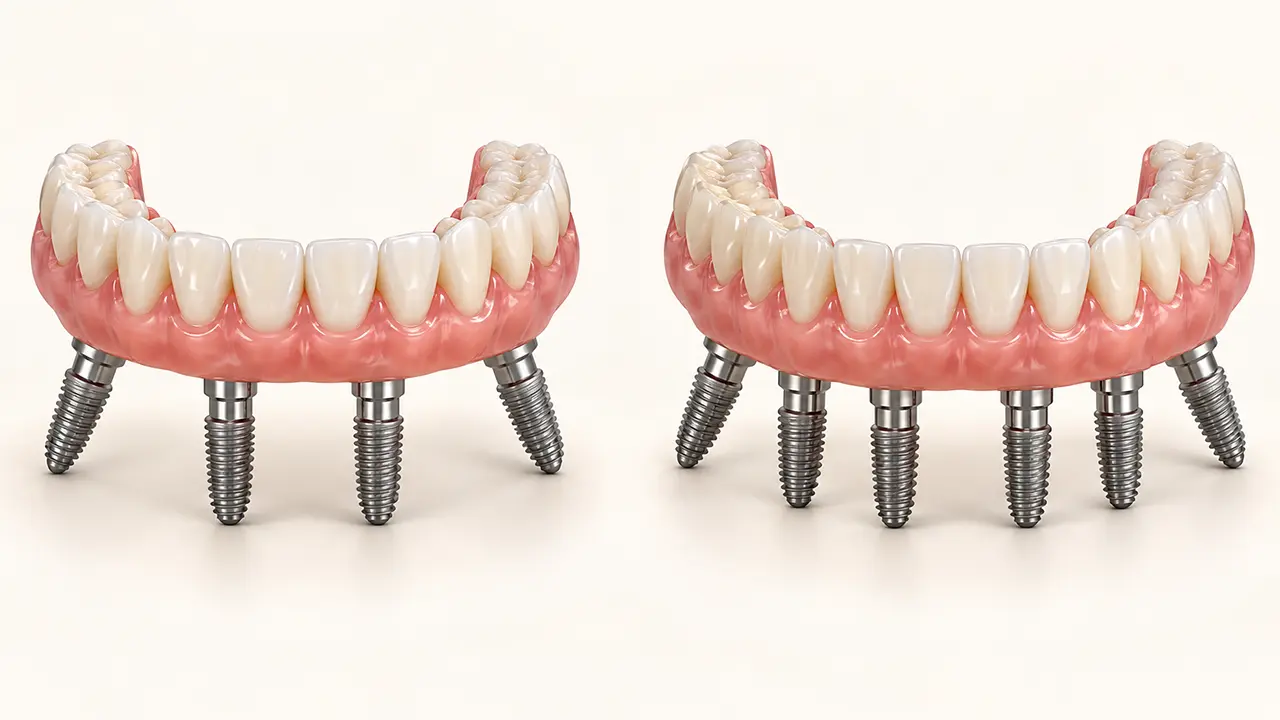
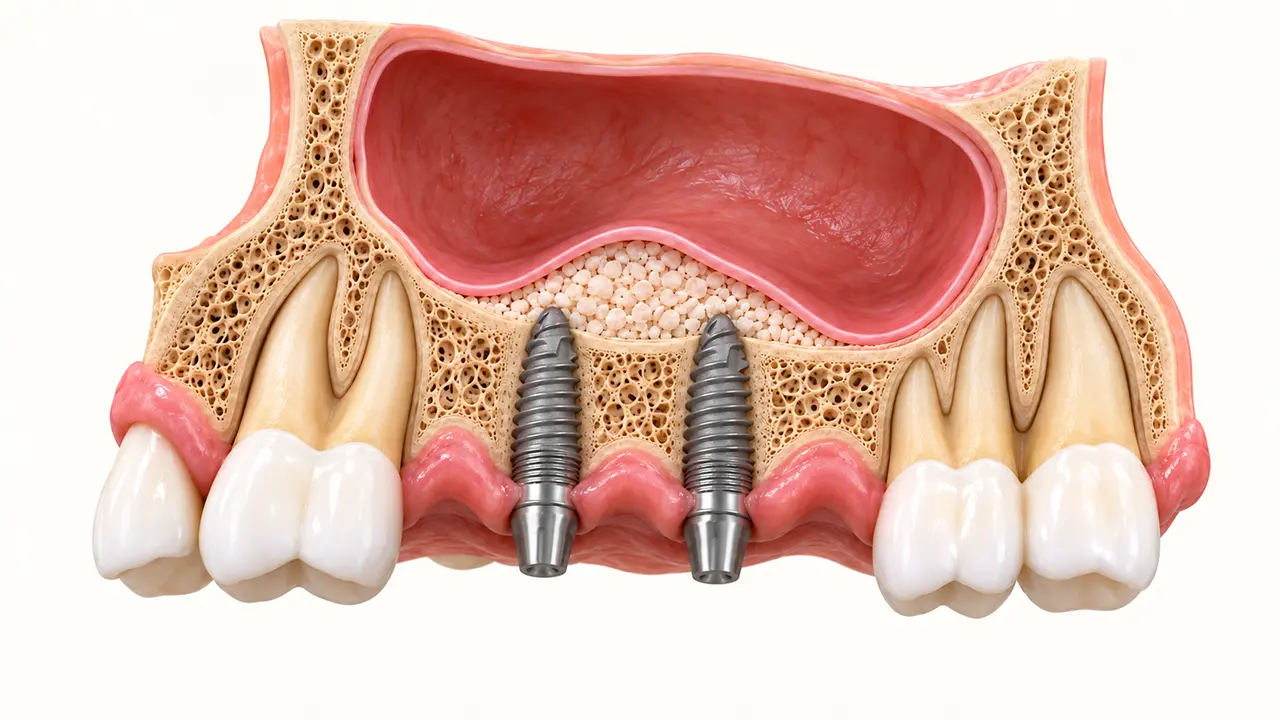
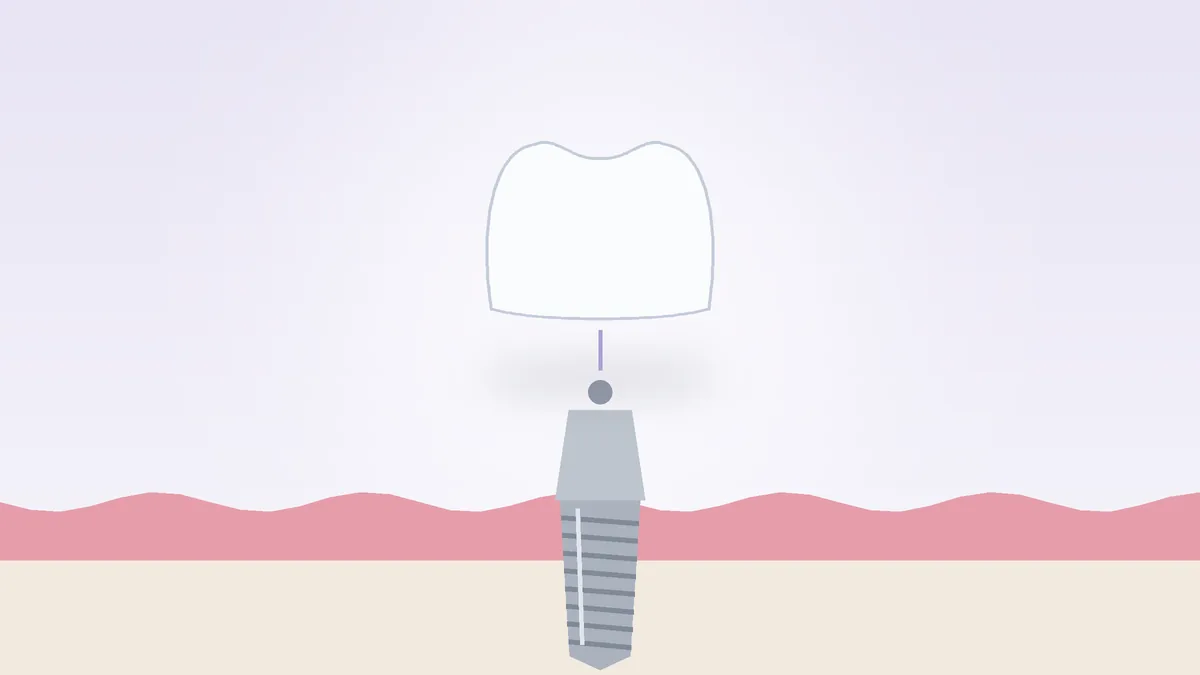
An implant restoration has three layers: the implant post in the jaw, an implant abutment that connects to it, and the crown you see and chew with. The crown is the part exposed to biting forces, wear and accidents, so it fails more often.
The same 2012 review measured both layers in the same patients. Implants supporting single crowns had estimated survival of 97.2% at 5 years and 95.2% at 10 years. The crowns on those implants came in lower, at 96.3% and 89.4%. A crown that fails can usually be replaced without touching the implant. For the evidence on the implant itself, see how long dental implants last.
How Long Do Implant Crowns Last in Clinical Studies?
These are model-based estimates that combine many studies. Survival means the crown is still in place, even if it has been repaired. The only 10-year estimate comes from studies published up to 2011, and survival in newer studies was clearly higher. So how long do implant crowns last today? Probably somewhat longer than the 10-year figure suggests, but no study gives a fixed number of years.
Which Crown Material Holds Up Best on an Implant?
No single material wins on every measure.
- Metal-ceramic vs zirconia-ceramic. In the 2018 review, both had high 5-year survival. Chipping of the porcelain layer was almost identical (2.9% vs 2.8%). Zirconia crowns had fewer aesthetic problems, but more of them failed because the material fractured (2.1% vs 0.2%). A PFM crown is the traditional metal-ceramic option.
- Veneered vs monolithic crowns. A crown milled from one solid block (monolithic) chipped less often than a crown with a porcelain layer on top: 0.39% vs 1.65% per year in the 2021 review.
- Glass-ceramic vs zirconia. At 3 years, survival ranged from 96.1% to 97.6% across glass-ceramic, alumina and zirconia crowns, with no statistically significant differences between them. Resin-matrix ceramic crowns were the clear exception, at 36.3%.
Front and back crowns had similar survival and chipping rates in the 2021 review. Long-term data on monolithic zirconia on implants are still limited. Our guide to how long zirconia crowns last looks at that material in more detail.
Screw-Retained or Cement-Retained: Does It Matter?
Implant crowns are either fixed to the abutment with dental cement or held by a small screw through the crown. A 2012 review compared the two:
The authors concluded that neither method was clearly better: cemented crowns had more serious biological problems, while screw-retained crowns had more technical ones. Because screw-retained crowns can be taken off without damage, they leaned toward preferring them. Survival of screw-retained restorations also improved markedly in newer studies, from 77.6% to 96.8% for screw-retained restorations of all types.
Common Implant Crown Problems
In the 2012 review of single implant crowns, cumulative 5-year rates were:
- Screw loosening: 8.8%. The abutment or crown screw works loose, and the crown may feel wobbly or click.
- Soft tissue complications: 7.1%. Gum inflammation around the crown.
- Aesthetic complications: 7.1%. For example, a visible gray margin or a gum line that has changed.
- Loss of retention: 4.1%. A cemented crown comes off the abutment.
- Veneer fracture: 3.5%. The porcelain layer chips or breaks.
The authors noted that technical, biological and aesthetic complications were frequent even though survival was high. Most of these problems are fixed without losing the crown.
How to Make an Implant Crown Last Longer
- Wear a night guard if you clench or grind, especially at night.
- Clean where the crown meets the gum with a soft brush and floss, interdental brushes or a water flosser.
- Keep regular checkups, so your dentist can test the crown for looseness and check your bite.
- Do not chew ice, pens or hard candy on implant crowns.
- Get a loose or clicking crown checked quickly. A loose screw left alone can lead to further damage to the screw or abutment.
Signs an Implant Crown Needs Repair or Replacement
- the crown moves, rotates or clicks when you bite
- a chip, crack or rough edge
- the crown comes off
- food packing between the crown and the next tooth
- gum bleeding, swelling or a gray line at the gum
- a change in how your teeth come together
Repair or Replacement Options
- Loose screw: retightened or replaced, which often takes one short visit.
- Crown off: a cement-retained crown can often be recemented if it is undamaged.
- Small chip: polished smooth, or sometimes repaired.
- Large fracture or worn-out crown: a new crown is made on the existing implant and abutment.
The implant usually stays in place throughout. Crowns on natural teeth follow a different pattern of wear and failure; see how long dental crowns last for that comparison.
Implant Crowns at Novexdent
At Novexdent's clinic in Istanbul, the permanent implant crown is fitted on the second visit, after three to six months of healing at home. That visit takes 5 to 7 days and includes placing the abutment. Crowns are made in zirconia, which is metal-free and hand color-matched, or in E.max lithium disilicate. For patients who grind, the clinic recommends a night guard after treatment. Our page on dental implants turkey explains each stage, and a free online consultation lets the dentists review your X-rays and photos before you travel.
Frequently Asked Questions
Can an implant crown be replaced without removing the implant?
Yes, in most cases. The crown is a separate part, so a new one can be made on the existing implant. Screw-retained crowns are the simplest to remove.
Why does my implant crown feel loose?
The most common cause is a loose abutment or crown screw. Less often, the cement has failed. Rarely, the implant itself has lost its bond with the bone, which is more serious. See your dentist promptly either way.
Can an implant crown get a cavity?
No. The crown is ceramic or metal-ceramic and cannot decay. The gum and bone around the implant can still become inflamed, so daily cleaning matters just as much as with natural teeth.
How long do implant crowns last compared with the implant itself?
Crowns have lower long-term survival. In the same review, 10-year estimates were 89.4% for the crowns and 95.2% for the implants supporting them. Replacing a crown is a much smaller procedure than replacing an implant.
Does grinding damage implant crowns?
It can. Clenching and grinding add stress to the crown, its porcelain and the screw. A night guard spreads that force and protects the restoration.
References
- Jung RE, Zembic A, Pjetursson BE, Zwahlen M, Thoma DS. Systematic review of the survival rate and the incidence of biological, technical, and aesthetic complications of single crowns on implants reported in longitudinal studies with a mean follow-up of 5 years. Clin Oral Implants Res. 2012;23(Suppl 6):2–21. doi:10.1111/j.1600-0501.2012.02547.x
- Pjetursson BE, Asgeirsson AG, Zwahlen M, Sailer I. Improvements in implant dentistry over the last decade: comparison of survival and complication rates in older and newer publications. Int J Oral Maxillofac Implants. 2014;29(Suppl):308–324. doi:10.11607/jomi.2014suppl.g5.2
- Pjetursson BE, Valente NA, Strasding M, Zwahlen M, Liu S, Sailer I. A systematic review of the survival and complication rates of zirconia-ceramic and metal-ceramic single crowns. Clin Oral Implants Res. 2018;29(Suppl 16):199–214. doi:10.1111/clr.13306
- Pjetursson BE, Sailer I, Latyshev A, Rabel K, Kohal RJ, Karasan D. A systematic review and meta-analysis evaluating the survival, the failure, and the complication rates of veneered and monolithic all-ceramic implant-supported single crowns. Clin Oral Implants Res. 2021;32(Suppl 21):254–288. doi:10.1111/clr.13863
- Sailer I, Mühlemann S, Zwahlen M, Hämmerle CH, Schneider D. Cemented and screw-retained implant reconstructions: a systematic review of the survival and complication rates. Clin Oral Implants Res. 2012;23(Suppl 6):163–201. doi:10.1111/j.1600-0501.2012.02538.x
LATEST ARTICLES
Beyond the Smile