All-on-4 vs All-on-6 Implants: Cost & Differences
All-on-4 and All-on-6 dental implants are full-arch tooth replacement solutions designed for patients who have lost most or all of their teeth. Both treatments use strategically positioned dental implants to support a fixed dental prosthesis, restoring chewing function, appearance, and everyday comfort.
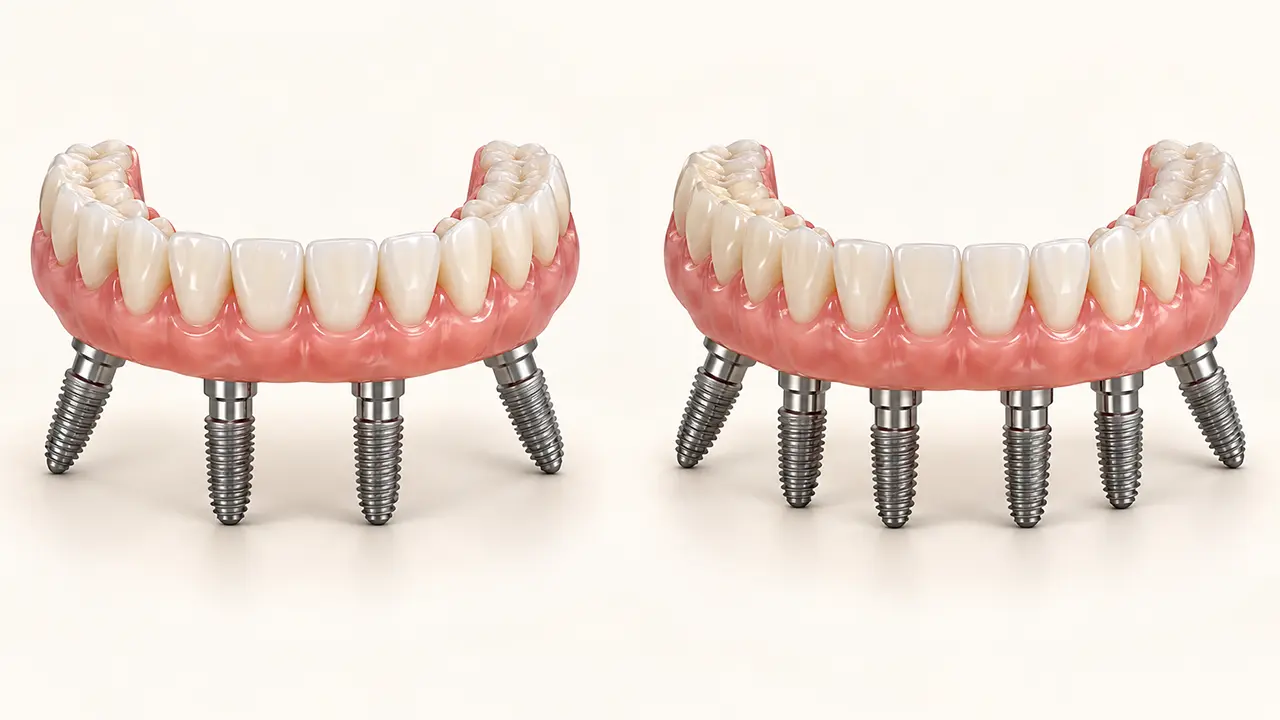
The main difference is the number of implants supporting each dental arch. All-on-4 uses four implants, while All-on-6 uses six. However, choosing between them involves more than simply comparing implant numbers.
Jawbone quality, bone volume, treatment complexity, prosthesis design, and the patient's long-term oral health all influence the most suitable approach.
For patients considering full-mouth dental restoration in Turkey, understanding the differences between these treatments can also help clarify expected costs, recovery periods, and the number of dental visits required.
What Are All-on-4 Dental Implants?
All-on-4 dental implants are a full-arch rehabilitation technique that replaces an entire upper or lower arch of missing teeth using four strategically positioned implants.
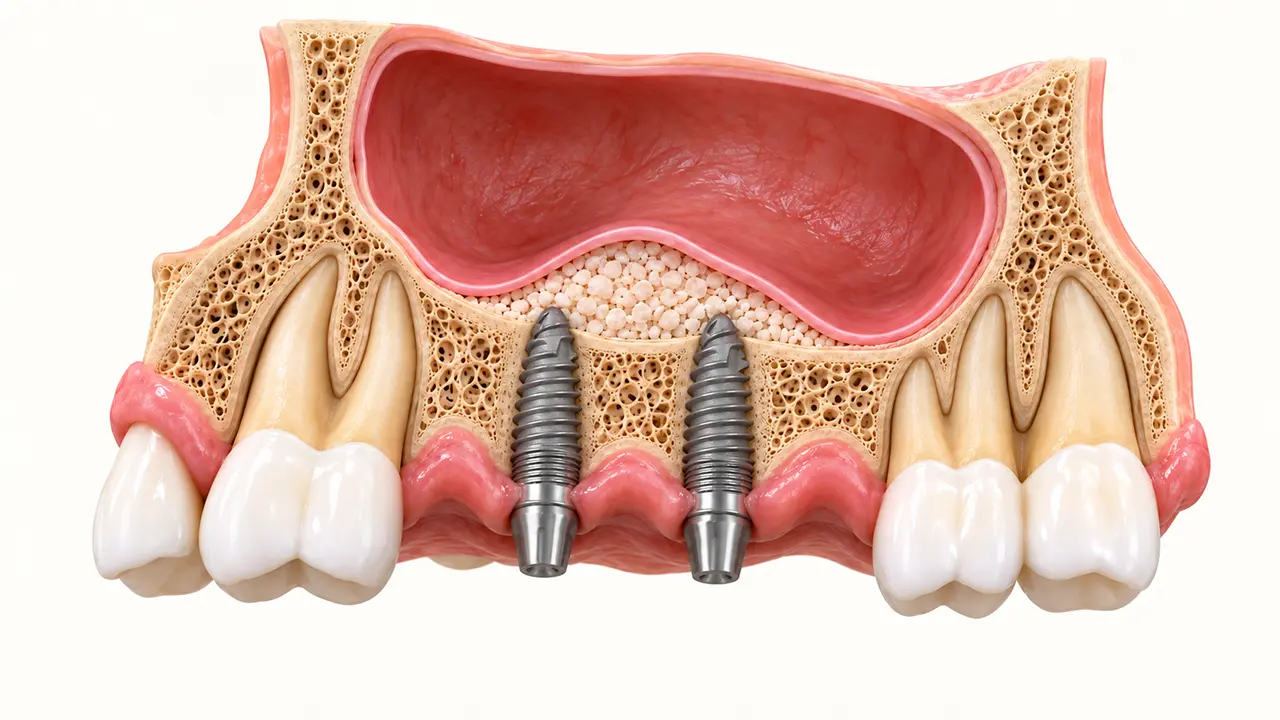
Typically, two implants are placed toward the front of the jaw, while the two posterior implants may be angled to take advantage of available bone. This positioning can help provide support for a fixed dental prosthesis without requiring an implant for every missing tooth.
The technique is commonly considered for patients who have lost most or all of their teeth, or whose remaining teeth cannot be predictably maintained.
Benefits of All-on-4 Dental Implants
Potential advantages include:
- Replacing an entire dental arch with four implants.
- Providing a fixed alternative to conventional removable dentures.
- Making use of available jawbone through strategic implant positioning.
- Reducing the number of implants required compared with some other full-arch approaches.
- Allowing a temporary fixed prosthesis to be attached shortly after surgery in suitable cases.
All-on-4 treatment does not automatically eliminate the need for bone grafting. Some patients may still require additional procedures depending on their anatomy and oral health.
What Are All-on-6 Dental Implants?
All-on-6 dental implants are a full-arch tooth replacement approach in which six implants support a fixed dental prosthesis.
Rather than placing a separate implant for every missing tooth, the dentist distributes six implants across the available jawbone to support an entire upper or lower arch.
The additional implants may offer greater flexibility in support distribution and prosthetic planning, depending on the patient's bone anatomy and the design of the restoration.
All-on-6 treatment may be considered when adequate bone is available for six implants and the clinician determines that this configuration is appropriate for the planned prosthesis.
Benefits of All-on-6 Dental Implants
Potential advantages include:
- Supporting a full dental arch with six implants.
- Providing additional implant support points for the fixed prosthesis.
- Offering flexibility in implant distribution and restorative design.
- Replacing conventional removable dentures with a fixed restoration.
- Supporting a long-term full-arch rehabilitation plan when appropriate maintenance is maintained.
Although All-on-6 uses more implants, this does not mean it is automatically better or more successful than All-on-4.
The effectiveness of either approach depends on appropriate case selection, implant placement, prosthetic design, and long-term maintenance.
All-on-4 vs All-on-6: What Are the Main Differences?
Both procedures aim to restore an entire arch of missing teeth with a fixed implant-supported prosthesis.
The differences primarily concern implant number, surgical planning, bone requirements, treatment costs, and prosthetic support.
The number of implants alone should not determine the treatment decision.
A 2026 systematic review and meta-analysis covering 55 studies found broadly similar clinical outcomes between four-implant and six-implant fixed full-arch restorations. The researchers also emphasized the considerable variation among the included studies.
This means treatment planning should focus on the patient's individual needs rather than assuming that six implants always provide a superior result.
Who Is a Suitable Candidate for All-on-4 or All-on-6?
Both procedures are generally intended for patients who require replacement of an entire dental arch.
Potential candidates include people who:
- Have lost all teeth in the upper or lower jaw.
- Have multiple failing teeth that cannot be predictably restored.
- Experience difficulties with removable dentures.
- Want to explore fixed full-arch dental restoration.
- Have suitable general and oral health for implant surgery.
Before recommending treatment, the dentist must evaluate jawbone volume and quality, gum health, medical history, bite characteristics, and the condition of any remaining teeth.
Three-dimensional imaging, such as a cone-beam computed tomography (CBCT) scan, may be used to assess implant positioning and anatomical limitations.
Patients with active gum disease, uncontrolled medical conditions, or insufficient bone may require additional treatment before implant surgery.
Smoking, poorly controlled diabetes, and a history of periodontal disease can also influence treatment planning and long-term risks.
How Are All-on-4 and All-on-6 Dental Implants Performed?
Although the implant numbers differ, both procedures generally follow a similar treatment process.
1. Consultation and Treatment Planning
The dentist evaluates the patient's dental condition, remaining teeth, jawbone structure, medical history, and treatment goals.
Diagnostic imaging helps determine whether four or six implants would be appropriate and whether bone augmentation is required.
2. Tooth Extractions and Surgical Preparation
If remaining teeth cannot be preserved, planned extractions may be performed before or during implant surgery.
Some patients may require bone grafting or other preparatory procedures. The exact sequence depends on the clinical findings.
3. Dental Implant Placement
For All-on-4 treatment, four implants are positioned to support the full-arch restoration.
For All-on-6 treatment, six implants are placed according to the planned distribution of support.
Implants are inserted into the jawbone under local anesthesia. Sedation or other anesthesia options may be considered based on the patient's circumstances and available clinical facilities.
4. Temporary Fixed Teeth
In suitable cases, a temporary fixed prosthesis can be attached on the day of surgery or shortly afterward.
This approach is known as immediate loading.
However, immediate loading is not suitable for every patient. The decision depends on implant stability, surgical findings, bone quality, and the planned restoration.
5. Healing and Osseointegration
During the following months, the implants undergo osseointegration, the process through which the surrounding bone establishes a stable connection with the implant surface.
Patients generally follow specific dietary and hygiene instructions during this period.
6. Final Prosthesis Placement
Once healing and implant integration are satisfactory, the dentist can proceed with the definitive full-arch restoration.
The final prosthesis is designed according to the patient's bite, oral anatomy, functional requirements, and selected restorative materials.
How Much Do All-on-4 and All-on-6 Dental Implants Cost in Turkey?
The cost of All-on-4 and All-on-6 dental implants in Turkey varies considerably between dental clinics and individual treatment plans.
All-on-6 treatment is often more expensive because it requires two additional implants per arch. However, the number of implants is only one component of the total cost.
Other important factors include implant brands, prosthesis materials, surgical procedures, and additional treatments.
Published 2026 Turkish market estimates show that All-on-4 and All-on-6 prices can differ substantially depending on whether the quotation includes the temporary restoration, definitive prosthesis, or both.
See our Dental Aesthetics Statistics page if u want to see about details Turkey's part of dental tourism.
Estimated All-on-4 and All-on-6 Prices in Turkey
These are broad advertised market estimates compiled from independent providers, not confirmed Novexdent treatment prices. Packages across providers may not include the same procedures or final restorations.
The estimates should be used only for preliminary comparison. Patients should obtain an individual written quotation based on an examination and diagnostic imaging.
What Affects the Final Treatment Cost?
Implant brand and components
Different implant systems have different costs and restorative requirements.
Prosthesis material
The cost may vary depending on whether the final restoration uses acrylic, composite, zirconia, or another suitable prosthetic material.
Additional surgical procedures
Extractions, bone grafting, and sinus augmentation can increase the overall treatment cost.
Temporary and permanent restorations
Some quotations include only a temporary fixed bridge. The definitive prosthesis may be priced separately.
Number of dental arches
Replacing one arch generally costs less than treating both the upper and lower jaws.
Postoperative care
Follow-up appointments, maintenance requirements, and treatment of complications should be considered when comparing overall costs.
Patients considering treatment in Turkey should also factor in accommodation, transportation, return visits, and any follow-up treatment required after returning home.
Which Is Better: All-on-4 or All-on-6 Dental Implants?
Neither All-on-4 nor All-on-6 is universally better.
The most suitable approach depends on how the implants can be positioned, the patient's remaining bone, the forces acting on the restoration, and the prosthetic treatment plan.
When Might All-on-4 Be Recommended?
All-on-4 may be considered when:
- Four strategically placed implants can provide adequate support.
- Available bone distribution makes the four-implant configuration appropriate.
- A fixed full-arch restoration can be designed without additional implant sites.
- The clinician determines that the expected functional demands can be adequately managed.
When Might All-on-6 Be Recommended?
All-on-6 may be considered when:
- Sufficient bone is available for six appropriately positioned implants.
- Additional implant support points are desirable for the restorative design.
- The patient's bite, bone anatomy, or prosthetic requirements favor six implants.
- The additional implants fit within a suitable long-term maintenance plan.
Evidence comparing the two approaches does not consistently demonstrate better implant survival simply because six implants are used.
For this reason, patients should discuss the clinical rationale behind the recommended number of implants rather than choosing solely based on cost or implant count.
How Long Do All-on-4 and All-on-6 Dental Implants Last?
Both treatments are intended to provide long-term tooth replacement, but their lifespan depends on several factors.
The implants and the prosthesis should also be considered separately.
Dental implants can remain functional for many years when properly integrated and maintained. However, implant complications, peri-implant disease, or changes in supporting bone may affect their long-term condition.
The fixed prosthesis can also experience wear, loosening, fracture, or other technical problems and may require maintenance, repair, or replacement.
Factors influencing long-term outcomes include:
- Oral hygiene and professional maintenance.
- Smoking and other health-related risk factors.
- Periodontal health.
- Implant positioning and prosthetic design.
- Bite forces and teeth grinding.
- Quality and condition of the supporting bone.
- Regular dental examinations.
A recent systematic review found similar overall survival outcomes between All-on-4 and All-on-6 restorations, although results varied across studies and follow-up periods.
No implant treatment can guarantee lifetime success.
What Is the Recovery Time for All-on-4 and All-on-6 Implants?
Initial recovery following full-arch implant surgery often involves swelling, tenderness, and some discomfort.
These symptoms commonly improve over the first one to two weeks, although individual healing periods vary.
Bone integration generally takes several months.
These timelines are illustrative rather than guaranteed. Complex cases, additional surgery, and individual healing factors may alter the treatment schedule.
Patients should follow their dentist's instructions regarding oral hygiene, medications, eating, physical activity, and follow-up visits.
A soft-food diet may be required for an extended period when a provisional fixed prosthesis is immediately loaded.
Risks and Possible Complications of Full-Arch Dental Implants
All-on-4 and All-on-6 treatments are established restorative approaches, but they involve surgical and prosthetic risks.
Potential complications include:
Infection: Bacterial infection can develop after surgery or around implants during long-term use.
Implant failure: An implant may fail to integrate properly or may lose support later.
Peri-implant disease: Inflammation and progressive bone loss around implants can threaten their long-term stability.
Nerve or sinus-related complications: Depending on implant location, nearby anatomical structures may be affected during surgery.
Prosthetic complications: The fixed bridge, screws, or restorative materials may become damaged or require adjustment.
Bite-related problems: Excessive forces, teeth grinding, or an unsuitable prosthetic design can contribute to mechanical complications.
A detailed clinical assessment, appropriate surgical planning, and routine maintenance can reduce certain risks, but complications cannot be eliminated entirely.
Patients should receive clear information about risks, alternatives, and postoperative responsibilities before agreeing to treatment.
All-on-4 and All-on-6 Dental Implants in Turkey: What Should Patients Consider?
Patients considering fixed full arch dental implants in Turkey should evaluate treatment quality, clinical planning, and follow-up care alongside the total price.
Important considerations include the qualifications of the treating dentist, diagnostic methods, implant system, prosthetic materials, and whether the treatment plan includes a temporary or final restoration.
International patients should clarify:
- Whether treatment requires one or multiple visits.
- How much time is required between implant surgery and final restoration.
- Whether the price covers all implant components.
- Whether bone grafting or additional procedures are included.
- How complications will be managed after returning home.
- What routine maintenance will be required in the long term.
At Novexdent, patients exploring full-arch tooth replacement can request an individual evaluation to discuss whether an All-on-4 or All-on-6 approach may be appropriate for their dental needs.
Learn more about available treatment options on our Dental Implants in Turkey page.
Frequently Asked Questions About All-on-4 and All-on-6 Dental Implants
Is All-on-6 better than All-on-4?
Not necessarily. All-on-6 uses two additional implants per arch, which may be beneficial for certain anatomical or prosthetic conditions. However, published research has not consistently established superior overall survival compared with All-on-4. The decision should be based on an individual clinical assessment.
Are All-on-4 and All-on-6 implants permanent?
Both are fixed implant-supported tooth replacement approaches designed for long-term use. The implants may remain functional for many years, but the prosthesis can require maintenance or replacement, and complications can affect implant longevity. Neither treatment is guaranteed to last forever.
Is All-on-6 more expensive than All-on-4?
All-on-6 is often more expensive because it involves six implants instead of four. However, the final price also depends on implant components, prosthesis materials, additional surgery, and the services included in the treatment package.
Can you eat normally with All-on-4 or All-on-6 implants?
After successful healing and placement of a suitable definitive restoration, many patients can eat a wide variety of foods. During the initial healing period, however, a restricted or soft-food diet may be necessary to protect the implants and temporary prosthesis.
Can All-on-4 and All-on-6 implants be fitted in one day?
In selected patients, implants and a temporary fixed prosthesis may be placed on the same day. This is known as immediate loading. It does not necessarily mean the definitive restoration is completed on that day. A final prosthesis is commonly placed after an additional healing period.
Do you need bone grafting for All-on-4 or All-on-6?
Not every patient requires bone grafting. The need depends on available bone volume, bone quality, implant positioning, and treatment design. All-on-4 may reduce the need for grafting in some cases through strategic implant placement, but this is not guaranteed.
How many teeth do All-on-6 implants replace?
All-on-6 is designed to replace an entire dental arch with a fixed prosthesis supported by six implants. The exact number of prosthetic teeth depends on the patient's anatomy, bite, and restorative treatment plan.
Can All-on-4 implants be upgraded to All-on-6?
Adding implants to an existing All-on-4 restoration may be possible in selected situations, but it is not a simple or routine upgrade. Existing implant positions, available bone, prosthetic design, and the condition of the restoration must be evaluated. A new prosthesis or further surgery may be required.
Medical References
- Shao W-H, Chen R, et al. (2026). All-on-4 and All-on-6 implant-supported fixed prostheses for the edentulous jaw: a systematic review and meta-analysis. International Journal of Oral and Maxillofacial Surgery.
https://pubmed.ncbi.nlm.nih.gov/42031576/ - Comparison of 4- or 6-implant supported immediate full-arch fixed prostheses: A retrospective cohort study of 217 patients followed up for 3–13 years. Clinical Implant Dentistry and Related Research (2022).
https://pubmed.ncbi.nlm.nih.gov/36522852/ - Outcomes that may affect implant and prosthesis survival and complications in maxillary fixed prosthesis supported by four or six implants: A systematic review and meta-analysis (2024).
https://pubmed.ncbi.nlm.nih.gov/38317918/
Medical disclaimer: This article provides general educational information and is not a substitute for professional dental diagnosis or individualized treatment planning. The suitability of All-on-4 or All-on-6 dental implants must be determined by a qualified dental professional after appropriate clinical and radiographic assessment.
LATEST ARTICLES
Beyond the Smile