Titanium vs Zirconia Implants: How Do They Compare?
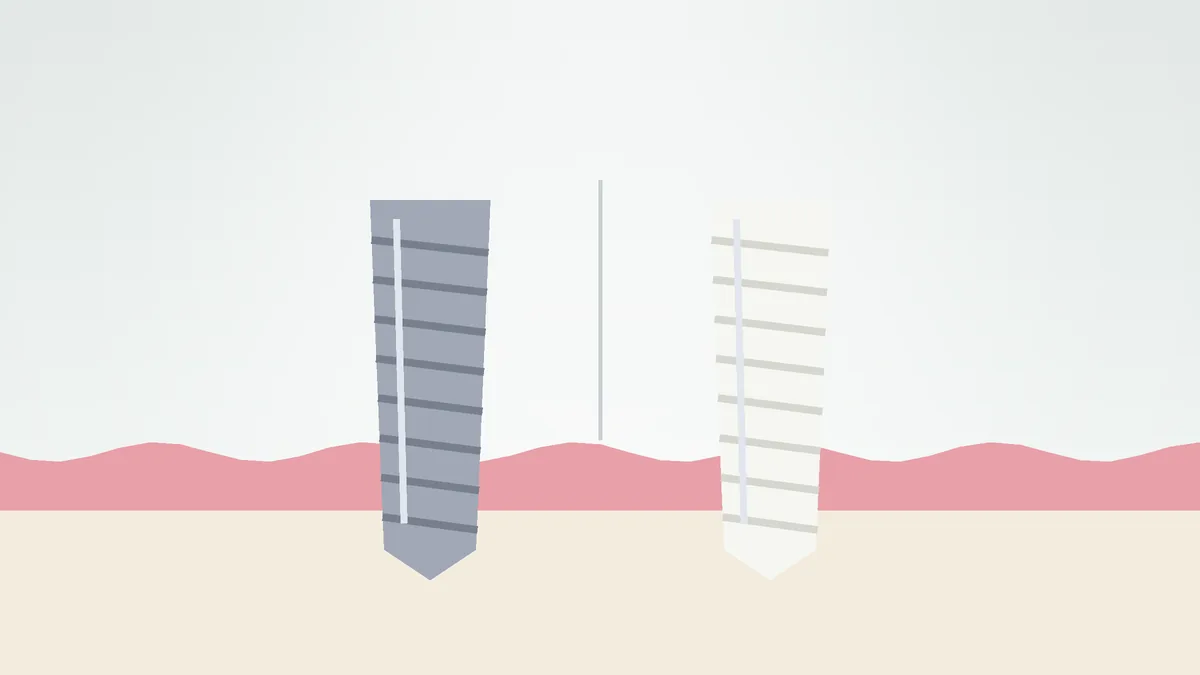
When comparing titanium vs zirconia implants, titanium has far more long-term evidence. One study of 511 titanium implants found 98.8% still in place after 10 years. Zirconia (ceramic) implants are a tooth-colored, metal-free alternative. A 2026 meta-analysis of comparative studies found similar survival for both materials over up to five years, but long-term zirconia data remain limited.
This guide to titanium vs zirconia implants explains how the two materials differ, what the research shows and which situations may favor each one.
What Are Titanium and Zirconia Implants Made Of?
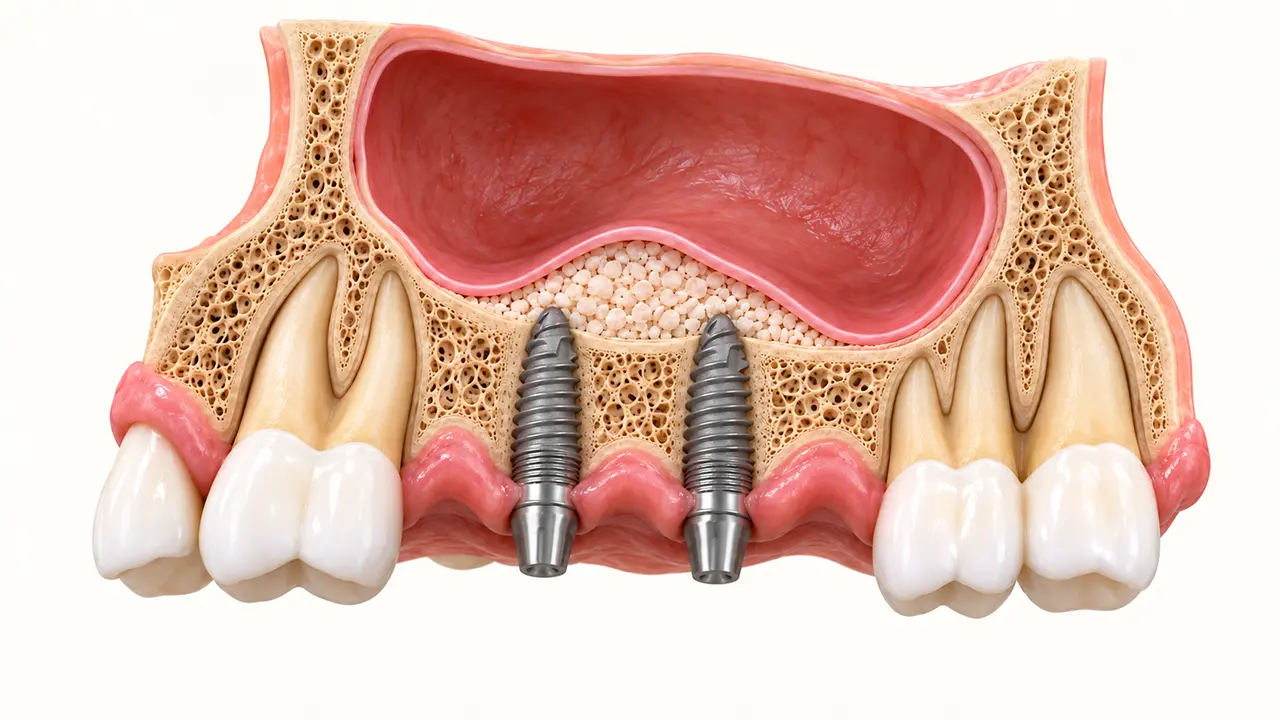
A dental implant is a post placed in the jawbone to replace a tooth root. Most implants used today are titanium, often with a roughened surface, such as sandblasted and acid-etched (SLA) titanium, to help bone attach.
Zirconia implants are made of zirconium dioxide, a white ceramic. Some systems use a composite version: one long-term study tested alumina-toughened zirconia (ATZ). Zirconia implants have been studied clinically for about two decades, and a 2018 review found that commercially available systems performed significantly better than earlier, non-commercial ones.
Do Both Materials Fuse With the Bone?
Yes. Both titanium and zirconia can achieve osseointegration, the direct bond between bone and implant surface. Researchers usually judge this by marginal bone loss, meaning how much bone level drops around the implant over time.
- In randomized trials, zirconia implants showed slightly more bone loss after one year, by about 0.16 mm on average.
- At five years or more, bone loss was comparable between the two materials.
- A separate review of zirconia implants estimated a mean of 1.1 mm bone loss five years after loading.
A difference of a fraction of a millimeter is small, and the authors note that part of the data comes from older systems no longer on the market.
What Does the Research Show on Survival?
Survival is the outcome most often used to compare titanium vs zirconia implants. It means the implant is still in the mouth; it does not guarantee the implant is problem-free.
Two cautions apply. First, the Kohal reports describe the same small group of patients, so they are one study, not two. Second, results depend heavily on the specific implant system. In a small study of a system that has since been withdrawn, immediately loaded one-piece zirconia implants reached only 62.2% survival over up to 108 months, compared with 80.8% for titanium implants of the same design.
For titanium implants, the long-term picture is covered in our guide on how long dental implants last.
One-Piece vs Two-Piece Designs
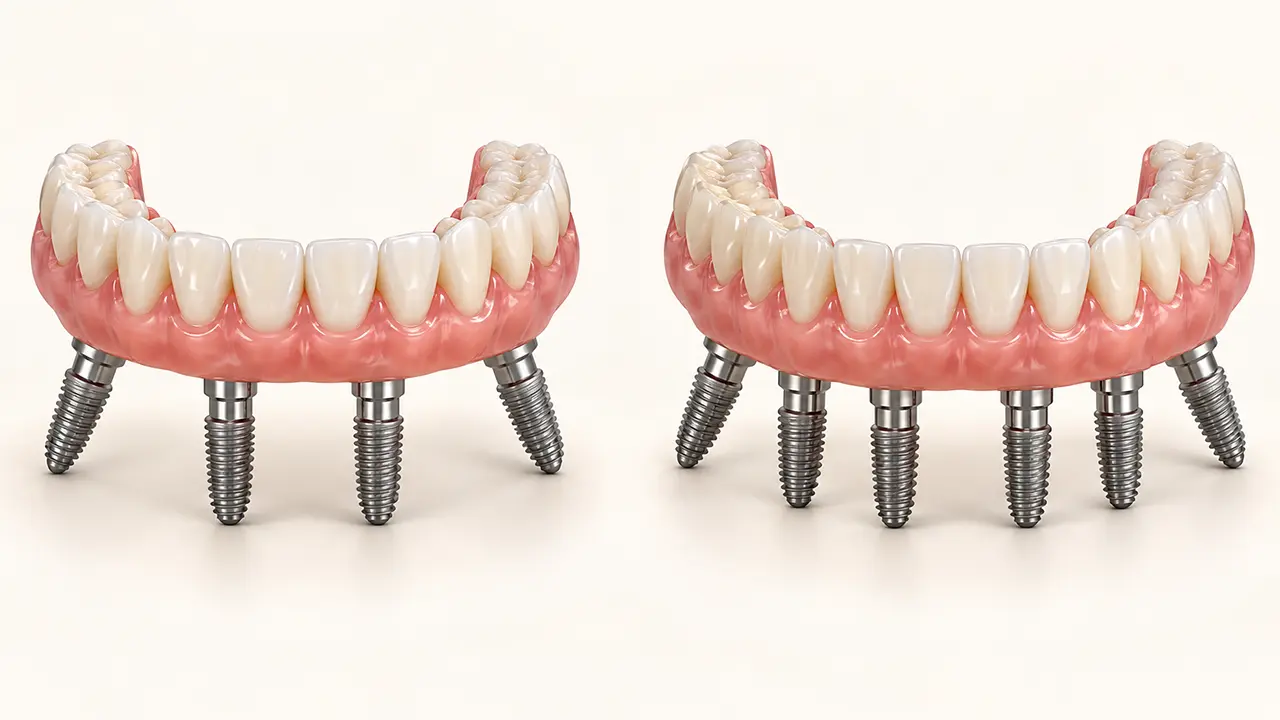
Implants come in two basic designs:
- One-piece: the implant and the part that holds the crown are a single unit.
- Two-piece: a separate connector, the implant abutment, is attached to the implant after healing.
Most titanium systems are two-piece, which gives flexibility in angling and replacing parts. Early zirconia implants were mainly one-piece: in a 2018 review, 14 of 18 included studies tested one-piece designs. In the 2026 comparative review, one-piece zirconia implants matched titanium on one-year survival, while two-piece zirconia showed a possible small disadvantage (risk ratio 0.94). Two-piece ceramic designs are newer and have less evidence behind them.
Titanium vs Zirconia Implants and Metal Sensitivity
True titanium allergy appears to be rare. In a Spanish clinic, 9 of 1,500 implant patients (0.6%) tested positive for titanium allergy. Most of them had already shown symptoms or unexplained implant failures before testing.
A 2026 systematic review found only nine relevant studies, mostly case reports covering 21 patients. In 17 of the confirmed cases, the implant had to be removed. The authors concluded that titanium hypersensitivity is rare but clinically relevant and that diagnostic tests still need standardization.
If you have a history of metal allergy or unexplained reactions, tell your dentist before treatment. That history may make a ceramic implant worth discussing.
Which Looks Better With Thin Gums?
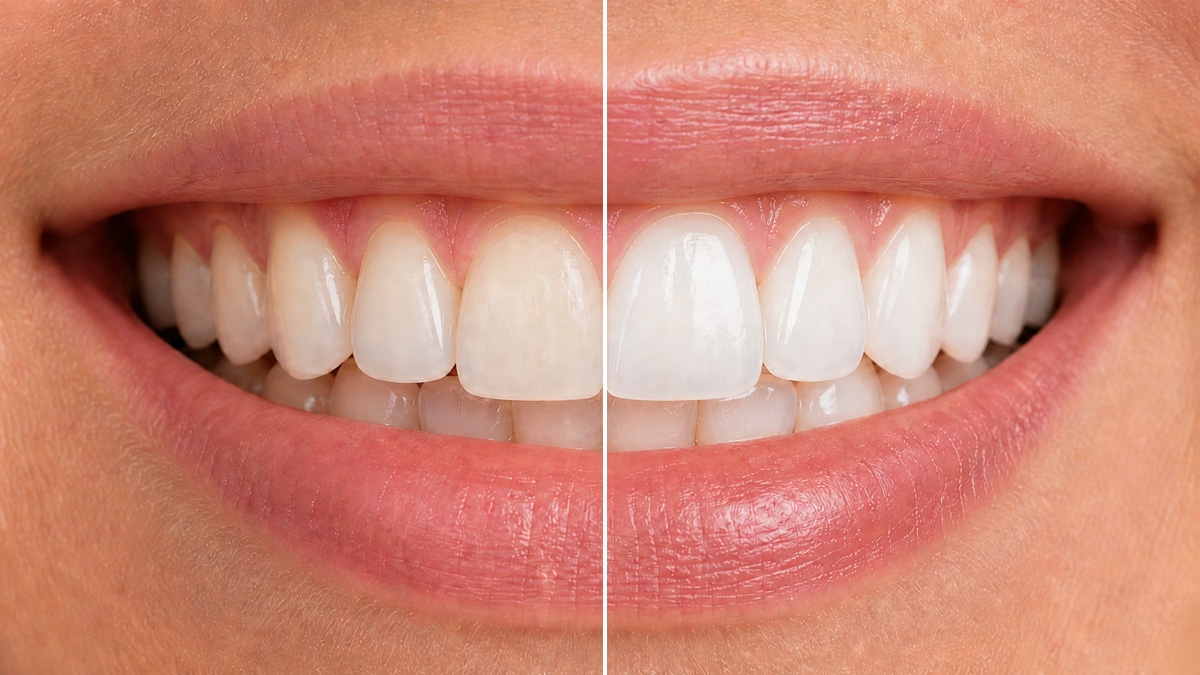
This is where zirconia has a theoretical advantage. In a laboratory study on animal tissue, titanium caused the most visible color change through the gum. Zirconia caused no visible change at 2.0 mm and 3.0 mm of soft tissue. At 3.0 mm, no material produced a change the human eye could detect.
In patients, the difference appears small. The 2026 comparative review found no significant difference in pink aesthetic scores, which rate how natural the gum around an implant looks. Gum thickness, implant position and the crown matter as much as the implant material.
Limitations of Each Material
- Titanium: a grayish tint can show through very thin gum tissue; rare hypersensitivity reactions; it is metal, which some patients prefer to avoid.
- Zirconia: much less long-term evidence; fewer two-piece options with mature data; some older systems performed poorly and were withdrawn; implant fractures were reported in 0.2% of commercially available zirconia implants over 12 to 61 months of follow-up.
Both materials can develop peri-implantitis, so daily cleaning and regular checkups matter either way.
Titanium vs Zirconia Implants: Side-by-Side Comparison
Dental Implants at Novexdent
Novexdent places titanium implants from Straumann (Swiss) and Medentika, a Straumann Group company. Treatment is planned with 3D jaw scans and usually follows two stages: implant placement on the first visit, three to six months of healing at home, then the abutment and permanent crown on a second visit. Our dental implant recovery time guide explains what that healing involves.
The clinic's website does not list zirconia implants. If you are interested in a ceramic implant, ask during your free online consultation so the dentists can tell you whether it is available and suitable. Details of the process for dental implants turkey are on our treatment page, and you can contact Novexdent dental clinic to share your X-rays.
Frequently Asked Questions
Can a zirconia implant break?
It is uncommon but possible. A 2018 review reported implant fractures in 0.2% of commercially available zirconia implants over short-term follow-up. Ceramics are more brittle than metal, so long-term fracture data are still being collected.
Can I have a zirconia crown on a titanium implant?
Yes, this combination is common. A 2018 systematic review estimated 97.6% five-year survival for zirconia crowns on implants, compared with 98.3% for metal-ceramic crowns. Zirconia crowns had fewer aesthetic complications but more failures from material fracture.
Should I be tested for titanium allergy before getting implants?
Routine testing is not standard. In the 1,500-patient study, testing was used selectively, and the authors suggested it mainly for patients who develop allergy-like symptoms after placement. Tell your dentist about any known metal allergies so they can decide whether further assessment makes sense.
Are zirconia implants a new technology?
Not entirely. Clinical studies date back to the early 2000s, but many early systems are no longer sold. Modern commercially available systems have shown better short-term results than the earlier generation, and newer two-piece designs are still building their evidence base.
Do zirconia implants heal faster than titanium?
There is no evidence that they do. Bone loss in the first year was slightly greater around zirconia in randomized trials, and it evened out by five years. Healing time depends more on bone quality, implant site and whether bone grafting is needed.
References
- Buser D, Janner SF, Wittneben JG, Brägger U, Ramseier CA, Salvi GE. 10-year survival and success rates of 511 titanium implants with a sandblasted and acid-etched surface: a retrospective study in 303 partially edentulous patients. Clin Implant Dent Relat Res. 2012;14(6):839–851. doi:10.1111/j.1708-8208.2012.00456.x
- Roehling S, Gahlert M, Bacevic M, Woelfler H, Laleman I. Clinical and radiographic outcomes of zirconia dental implants: A systematic review and meta-analysis. Clin Oral Implants Res. 2023;34(Suppl 26):112–124. doi:10.1111/clr.14133
- Pachiou A, Delgado-Ruiz R, Schnurr E, Kim DM, Romanos GE, Balmer M. ZrO Summit 2025, Group 1, 'Survival and Clinical Performance of Zirconia Compared to Titanium Implants: A Systematic Review and Meta-Analysis'. Int J Oral Maxillofac Implants. 2026. Online ahead of print. doi:10.11607/jomi.11788
- Kohal RJ, Spies BC, Vach K, Balmer M, Pieralli S. A Prospective Clinical Cohort Investigation on Zirconia Implants: 5-Year Results. J Clin Med. 2020;9(8):2585. doi:10.3390/jcm9082585
- Kohal RJ, Patzelt SBM, Spies BC, Iwasaki T, Kubochi K, Vach K, Balmer M. Ten-Year Results of a Prospective Case Series on Immediately Provisionalized One-Piece Alumina-Toughened Zirconia (ATZ) Oral Implants for Single-Tooth Restoration and Three-Unit Fixed Dental Prostheses. J Clin Periodontol. 2026;53(9):1403–1412. doi:10.1111/jcpe.70156
- Roehling S, Schlegel KA, Woelfler H, Gahlert M. Performance and outcome of zirconia dental implants in clinical studies: A meta-analysis. Clin Oral Implants Res. 2018;29(Suppl 16):135–153. doi:10.1111/clr.13352
- Herber V, Steyer E, Koller M, Nassehi Y, Pichler A, Payer M. Long term follow-up of immediately temporized zirconia and titanium one-piece dental implants: a prospective cohort study. Int J Implant Dent. 2025;11(1):70. doi:10.1186/s40729-025-00655-1
- Sicilia A, Cuesta S, Coma G, Arregui I, Guisasola C, Ruiz E, Maestro A. Titanium allergy in dental implant patients: a clinical study on 1500 consecutive patients. Clin Oral Implants Res. 2008;19(8):823–835. doi:10.1111/j.1600-0501.2008.01544.x
- Restelli L, Uriarte X, Moreno X, Mena C, Fernández E, Fan S, Díaz L. Titanium hypersensitivity in dental implants: A systematic review of updated clinical evidence and diagnostic strategies. J Prosthodont Res. 2026;70(4):538–548. doi:10.2186/jpr.JPR_D_25_00255
- Jung RE, Sailer I, Hämmerle CH, Attin T, Schmidlin P. In vitro color changes of soft tissues caused by restorative materials. Int J Periodontics Restorative Dent. 2007;27(3):251–257. PubMed 17694948
- Pjetursson BE, Valente NA, Strasding M, Zwahlen M, Liu S, Sailer I. A systematic review of the survival and complication rates of zirconia-ceramic and metal-ceramic single crowns. Clin Oral Implants Res. 2018;29(Suppl 16):199–214. doi:10.1111/clr.13306
LATEST ARTICLES
Beyond the Smile