How Long Do Veneers Last?

Porcelain veneers often last 10 to 20 years, and some last longer. In long-term clinical studies, more than 9 in 10 were still in place after 10 years and about 8 in 10 after 20 years. Composite veneers generally have a shorter lifespan. How long yours last depends on the material, the quality of the bond, your bite, your oral health and how you care for them.
This guide explains what the research shows, why some veneers fail early, how to protect yours and when it is time to repair or replace them.
Average Lifespan of Dental Veneers
Lifespan figures come from clinical studies that follow groups of veneers over time. They report three different measures:
- Survival rate: the share of veneers still in place and functioning, sometimes after minor repair.
- Failure rate: the share lost or replaced.
- Complication rate: the share with a problem, such as chipping, whether or not the veneer failed.
Expected lifespan is an estimate drawn from these figures, not a measured number for any one patient.
These are group averages from monitored study patients, not a guarantee for any individual veneer. Porcelain veneers have been followed for up to 20 years; composite data are shorter-term and come from fewer studies, so their long-term lifespan is less certain.
How Long Do Porcelain and Composite Veneers Last?
Porcelain veneers
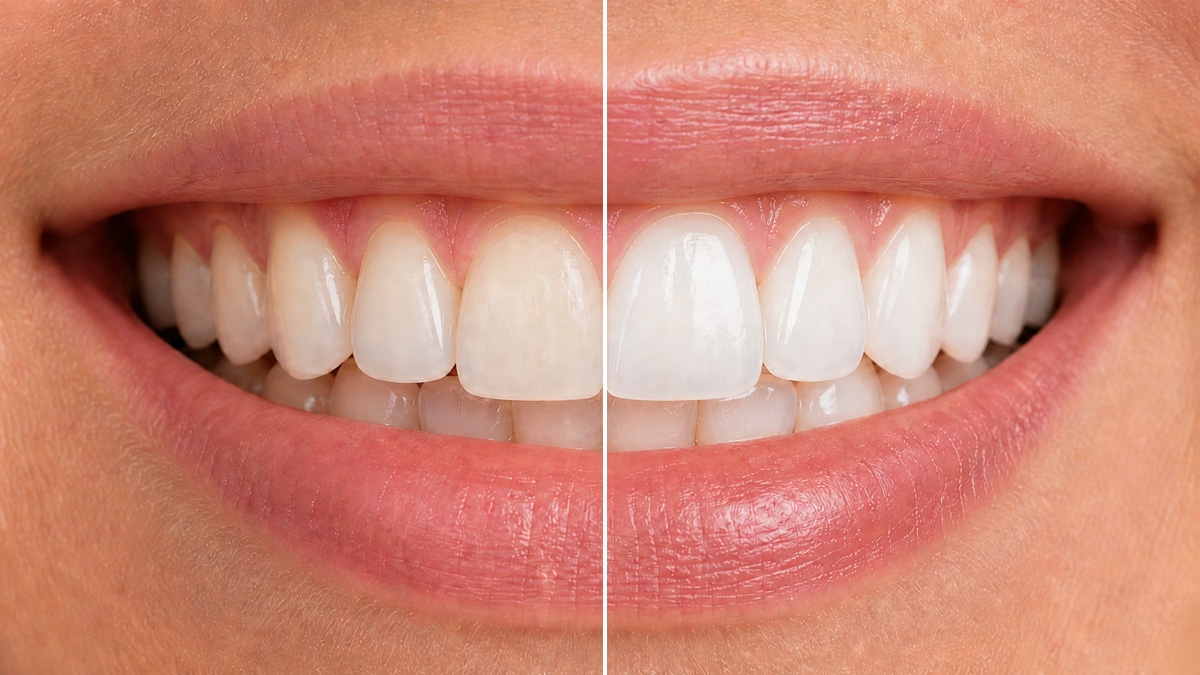
Porcelain veneers are thin ceramic shells made in a dental lab and bonded to the front of the teeth. Glass-ceramics such as lithium disilicate, used in E.max veneers, are now common. One 2021 review found lower failure rates for these ceramics than for traditional feldspathic porcelain; an earlier meta-analysis found no significant difference. Fracture is the most common complication, followed by debonding, and both occur more often in the first years after placement.
The glazed ceramic surface resists staining and wear well. The bonded edge where the veneer meets the tooth can still discolor over time.
Composite veneers
Composite veneers are made of tooth-colored resin, usually built up directly on the tooth in one visit. They cost less and often need little or no tooth preparation. The American Dental Association notes that they are easier to fix than porcelain but less resistant to staining and wear. In clinical studies, the most reported problems were surface roughness, color mismatch and edge staining, most of them clinically acceptable with or without touch-ups. Our composite vs porcelain veneers comparison covers the differences in cost, appearance and preparation.
What Factors Affect Veneer Longevity?
- Teeth grinding. Bruxism is one of the strongest predictors of failure. In a study of porcelain veneers followed for up to 20 years, patients who ground their teeth had a 7.7 times higher risk of failure. Another study found that wearing an occlusal splint reduced fractures.
- Oral hygiene. The veneer itself cannot decay, but the tooth underneath can, especially at the margin. Gum disease and gum recession can also expose the veneer edges.
- Bite alignment. A deep overbite or an edge-to-edge bite puts extra force on the veneers. The ADA notes that veneers may not be a good choice for people with a deep overbite or who clench or grind.
- Veneer material and bonding. Veneers bond most reliably to enamel. In a study with up to 12 years of follow-up, veneers bonded to dentin, or with preparation margins in dentin, were about 10 times more likely to fail than veneers bonded to enamel. This is one reason conservative tooth preparation matters.
- Dental health. Nonvital teeth, such as root canal–treated teeth, showed a significantly higher failure risk in long-term follow-up. Existing decay should be treated first.
- Lifestyle habits. Smoking was linked to more discoloration at the edges. Biting nails, chewing ice or pens, opening packages with your teeth and contact sports without a mouthguard all raise the risk of chips and fractures.
How to Make Veneers Last Longer
- Brush twice a day with fluoride toothpaste and clean between your teeth daily to protect the tooth and gums around each veneer.
- Wear a night guard if you grind or clench your teeth.
- Do not use your teeth as tools. Avoid biting hard objects such as ice, pens, nails or bottle caps.
- Wear a mouthguard for contact sports.
- Limit staining drinks and tobacco. Coffee, tea and red wine can discolor composite and the bonded edges.
- Keep regular dental checkups and cleanings so early problems at the margins can be spotted.
- Get small chips or rough edges checked early. Minor damage is easier to fix before it spreads.
When Should Veneers Be Replaced?
A veneer usually needs replacing when it can no longer be repaired, or when the tooth underneath needs treatment. Signs to watch for include:
- a crack, chip or fracture across the veneer
- a veneer that feels loose or has come off
- a dark line or visible gap along the edge
- decay at or under the veneer margin
- new sensitivity or pain in the tooth
- gum recession that exposes the veneer edge
- a composite veneer that stays stained or dull after polishing
- a bite that feels different
Pain, swelling or sensitivity can point to a problem with the tooth itself, not just the veneer, and should be checked promptly. Replacing a veneer means removing the old one and preparing the tooth again. If too little healthy tooth remains, a crown may be the better option; our guide explains how dentists choose between veneers and crowns.
Can Damaged Veneers Be Repaired?
It depends on the material and the extent of the damage. The ADA notes that a veneer that chips, cracks, wears or loosens may be re-bonded, repaired or replaced.
- Composite veneers can usually be repaired by adding and polishing new resin in a single visit.
- Porcelain veneers with a very small chip can sometimes be smoothed or patched with composite resin. A crack through the veneer, or a large fracture, usually means replacement.
- A veneer that has come off in one piece can often be re-bonded if both the veneer and the tooth are undamaged.
If a veneer comes off, keep it, avoid chewing on that side and see a dentist. Do not try to glue it back at home.
Dental Veneers at Novexdent
At Novexdent in Istanbul, veneer treatment uses E.max and laminate porcelain veneers. Before any tooth is prepared, a digital smile preview lets you see and approve the planned result on screen. Preparation is typically limited to about 0.3–0.5 mm, and some teeth need none. Because grinding is a leading cause of veneer failure, the clinic recommends a night guard after treatment, and aftercare includes yearly check-ins once you are home.
If you are considering treatment abroad, our guide to veneers in Turkey, including cost and process explains what to expect. A free online consultation based on your photos or X-rays can show whether veneers suit your teeth.
Frequently Asked Questions
Can veneers last a lifetime?
Sometimes, but it is safer to plan for at least one replacement, especially if you get veneers young. In a long-term study, about 8 in 10 porcelain veneers were still in place after 20 years.
How often should veneers be replaced?
There is no fixed replacement schedule. Veneers are replaced when they fracture, loosen, stay discolored after polishing or when the tooth underneath needs treatment. Porcelain veneers often last 10 to 20 years or longer, while composite veneers usually need repair or replacement sooner. Regular checkups help your dentist judge when replacement is due.
Does teeth grinding shorten veneer lifespan?
Yes. Grinding and clenching put repeated force on veneers. Long-term research links bruxism to a markedly higher risk of porcelain veneer failure, and in one study most fractures and debondings occurred in patients who ground their teeth. Occlusal splints (night guards) were linked to fewer fractures, so dentists often recommend one for patients who grind.
Can veneers fall off?
Yes, although it is uncommon. Debonding is the second most common porcelain veneer complication, after fracture. If both the veneer and the tooth are undamaged, it can often be re-bonded.
Do veneers stain?
Porcelain veneers strongly resist staining, but the bonded edges can darken over time. Composite veneers absorb stains more easily and need periodic polishing.
Can you whiten veneers?
No. The ADA notes that whitening does not work on veneers. If you want to whiten your natural teeth, do it before your veneers are color-matched.
Can teeth decay under veneers?
Yes, at the edge where the veneer meets the tooth. It was uncommon in clinical studies, and good hygiene and regular checkups help prevent it.
Do E.max veneers last longer than other porcelain veneers?
Possibly. A 2021 systematic review found lower failure rates for glass-ceramics like E.max than for feldspathic porcelain, but a 2016 meta-analysis found no significant difference. Bonding, bite and grinding habits also strongly affect longevity.
Are veneers permanent?
The procedure is generally considered irreversible because some enamel is usually removed. The veneers themselves are not permanent and will eventually need maintenance or replacement.
References
- Alenezi A, Alsweed M, Alsidrani S, Chrcanovic BR. Long-Term Survival and Complication Rates of Porcelain Laminate Veneers in Clinical Studies: A Systematic Review. J Clin Med. 2021;10(5):1074. doi:10.3390/jcm10051074
- Beier US, Kapferer I, Burtscher D, Dumfahrt H. Clinical performance of porcelain laminate veneers for up to 20 years. Int J Prosthodont. 2012;25(1):79–85. PubMed 22259802
- Morimoto S, Albanesi RB, Sesma N, Agra CM, Braga MM. Main Clinical Outcomes of Feldspathic Porcelain and Glass-Ceramic Laminate Veneers: A Systematic Review and Meta-Analysis of Survival and Complication Rates. Int J Prosthodont. 2016;29(1):38–49. doi:10.11607/ijp.4315
- Lim TW, Tan SK, Li KY, Burrow MF. Survival and Complication Rates of Resin Composite Laminate Veneers: A Systematic Review and Meta-Analysis. J Evid Based Dent Pract. 2023;23(4):101911. doi:10.1016/j.jebdp.2023.101911
- Gurel G, Sesma N, Calamita MA, Coachman C, Morimoto S. Influence of enamel preservation on failure rates of porcelain laminate veneers. Int J Periodontics Restorative Dent. 2013;33(1):31–39. doi:10.11607/prd.1488
- Granell-Ruíz M, Agustín-Panadero R, Fons-Font A, Román-Rodríguez JL, Solá-Ruíz MF. Influence of bruxism on survival of porcelain laminate veneers. Med Oral Patol Oral Cir Bucal. 2014;19(5):e426–e432. doi:10.4317/medoral.19097
- American Dental Association, MouthHealthy. Veneers. mouthhealthy.org/all-topics-a-z/veneers
- American Dental Association, MouthHealthy. Teeth Whitening. mouthhealthy.org/all-topics-a-z/teeth-whitening
LATEST ARTICLES
Beyond the Smile