E.max vs Zirconia Crowns: Key Differences
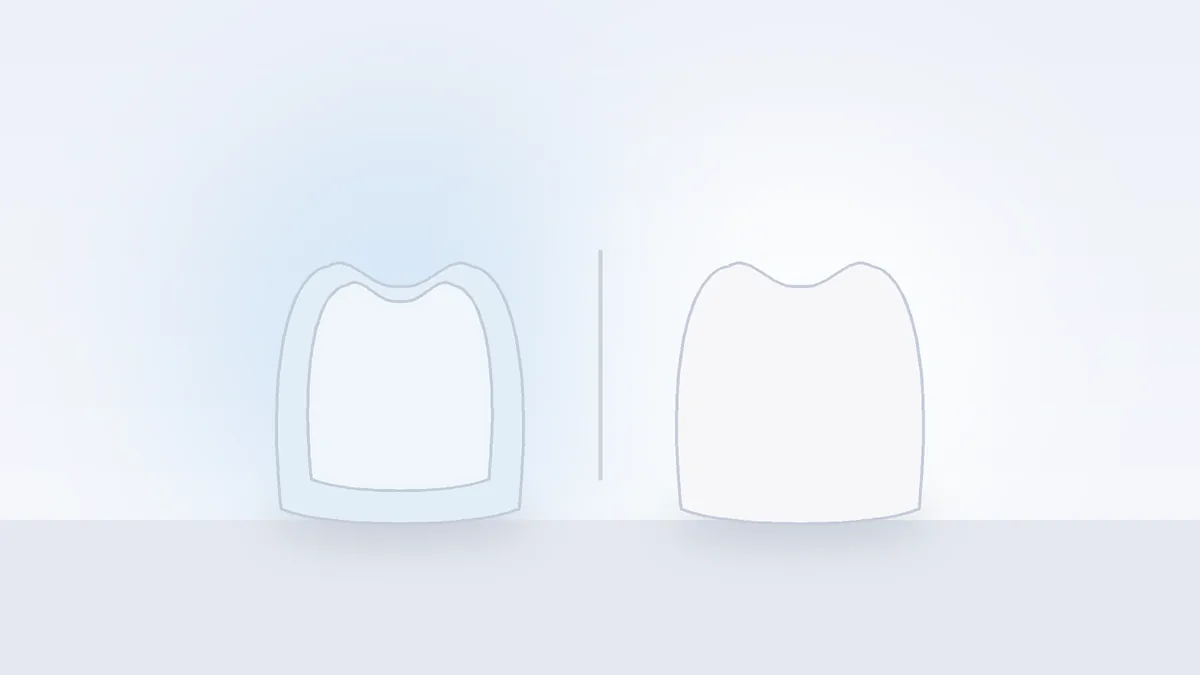
E.max vs zirconia crowns is mainly a trade-off between light transmission and strength. E.max is a lithium disilicate glass-ceramic that looks very lifelike and bonds to the tooth. Zirconia is a far stronger, more opaque ceramic. In a 2026 meta-analysis, both reached roughly 97–99% estimated five-year survival when made as single-piece (monolithic) crowns.
This guide sets out E.max vs zirconia crowns on strength, appearance, fitting and the teeth each one suits best.
What Are E.max and Zirconia Crowns?
Both are metal-free ceramic crowns, but they are built very differently.
- E.max is a brand of lithium disilicate, a glass-ceramic with needle-shaped crystals set in a glass matrix. Crowns are pressed or milled. They can be monolithic (one solid material) or layered, with veneering porcelain added on top.
- Zirconia (zirconium dioxide) is a polycrystalline ceramic with no glass phase. A 2018 review describes zirconias as the strongest of the dental ceramics. Crowns are either monolithic (full-contour zirconia) or veneered, with porcelain layered over a zirconia core.
"Zirconium crown" and "zirconia crown" refer to the same thing. The difference between monolithic and layered designs turns out to matter almost as much as the material itself.
Which Is Stronger, E.max or Zirconia?
Zirconia is stronger in laboratory tests. A 2019 review of both materials reports these typical values:
- Flexural strength: 370–460 MPa for pressed E.max, compared with 500–1,200 MPa for zirconia. Newer translucent zirconias fall between 500 and 900 MPa.
- Fracture toughness: 2.8–3.5 MPa√m for pressed E.max, compared with 5–10 MPa√m for zirconia.
Lab strength does not translate directly into clinical lifespan, so real-world fracture data are more useful. A survey of two dental laboratories tracked remakes caused by fracture across 188,695 restorations over up to 7.5 years:
This survey counted fractures only, not other reasons for replacement, so it is not a survival rate. Still, the pattern is clear: layered zirconia, where the weaker porcelain layer can chip, had the highest rate of the four.
How Long Do E.max and Zirconia Crowns Last?
The most recent systematic review pooled 64 studies of tooth-supported single crowns and estimated five-year survival (crowns still in place) by material and design:
Monolithic lithium disilicate and monolithic zirconia both had significantly fewer ceramic fractures and chips than veneered versions. These are model-based five-year estimates; the review gives no 10-year comparison.
Ten-year data for E.max conflict, largely because studies count failure differently. In one private practice, 1,960 pressed E.max restorations, including some bridges, showed 99.6% estimated cumulative survival at 10 years, counting only bulk fractures or large chips. A smaller university study of 41 chairside-milled molar and premolar crowns, with 26 re-examined, found 83.5% survival at 10 years because it also counted root fractures, endodontic problems and decay. In both studies, failures clustered in molars.
Survival percentages describe groups of crowns, not how long yours will last. For zirconia in more detail, see our guide on how long zirconia crowns last.
Which Looks More Natural?
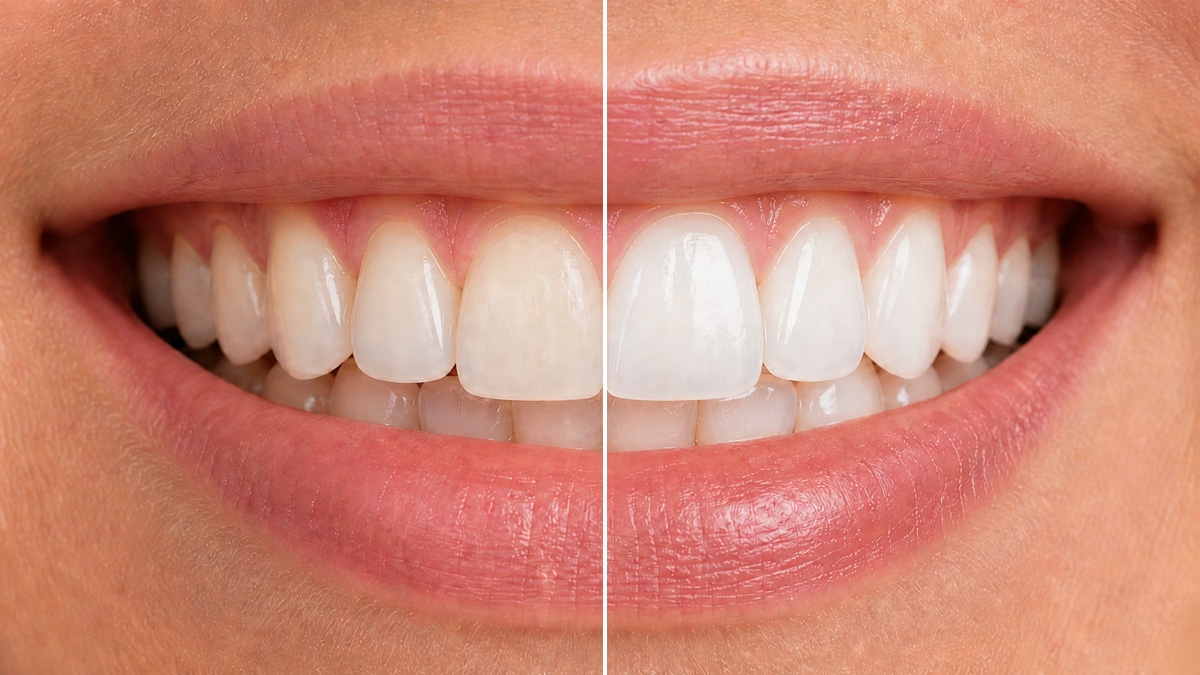
E.max usually has the edge on translucency. A 2018 review notes that standard zirconia lacks the aesthetics of glass-ceramics and is somewhat restricted in the front of the mouth. Conventional tetragonal zirconia lets only about 25% of incident light through. That opacity has one benefit: it can hide a dark tooth or a metal post underneath.
The gap is narrowing. Newer ultra-translucent and multicolor monolithic zirconias have translucency similar to the more translucent lithium disilicates, according to a 2019 review, although their long-term clinical behavior still needs study. Where appearance matters most, zirconia is often layered with porcelain, which brings back the chipping risk described above.
How Are E.max and Zirconia Crowns Fitted?
The two materials attach to the tooth in different ways:
- E.max contains glass, so its inner surface can be etched with hydrofluoric acid and treated with silane. This lets it bond chemically and micromechanically to the tooth with resin cement.
- Zirconia cannot be etched by conventional methods. On a well-shaped, retentive full-coverage preparation, conventional cements such as glass-ionomer or zinc phosphate are considered a good choice. Resin cements, after special surface treatment, are used when the tooth is short or offers little retention.
Does the cement choice change outcomes? A systematic review of 17 clinical studies and 2,436 zirconia and lithium disilicate crowns found comparable survival with adhesive and conventional cementation, though the studies were of poor quality.
Thickness also differs. Monolithic zirconia can be made as thin as 0.5 mm, while layered zirconia needs 1.0–1.5 mm in total. How much tooth is removed still depends on the tooth, the bite and the chosen design, so your dentist will plan this case by case.
E.max vs Zirconia Crowns for Front Teeth, Back Teeth and Grinding
- Front teeth: E.max is a frequent choice because of its translucency. Translucent or layered zirconia is an alternative, especially over a discolored tooth.
- Back teeth: Reviews support monolithic zirconia in the back of the mouth. In the pooled 2026 data, monolithic lithium disilicate and zirconia performed similarly in front and back teeth, but individual E.max studies report most failures in molars.
- Grinding: Direct clinical comparisons in people with bruxism are scarce. Many dentists lean toward monolithic zirconia for heavy biters because of its higher strength, and a night guard is commonly advised with either material.
Neither material is universally better. If you are also weighing older options, our comparison of zirconia vs porcelain crowns covers metal-ceramic and porcelain designs.
E.max vs Zirconia Crowns: Side-by-Side Comparison
E.max and Zirconia Crowns at Novexdent
Novexdent offers both zirconia crowns, which are metal-free and hand color-matched, and E.max (lithium disilicate) crowns. Because E.max is less strong than zirconia, the clinic notes that it may not suit back teeth in some cases. Crown work typically comes with a 5-year guarantee.
Our page on zirconium crowns turkey explains the treatment steps and timeline. If you are unsure which material fits your bite, Novexdent's dentists in Istanbul can review your photos and X-rays during a free online consultation before you book.
Frequently Asked Questions
Are zirconia or E.max crowns harder on opposing teeth?
Both are gentle when well polished. In laboratory tests, polished lithium disilicate wears opposing teeth at a rate close to enamel, while polished monolithic zirconia was even less abrasive. Rough or unpolished surfaces on either material increase wear, so polishing after any adjustment matters.
Can you tell an E.max crown from a zirconia crown by looking?
Often not. In the debate over E.max vs zirconia crowns, the visible difference is smallest in the back of the mouth. On front teeth, standard zirconia can look slightly more opaque next to natural enamel. Newer translucent zirconias are much harder to tell apart.
Is one material better for a tooth that has had a root canal?
It depends on how dark the tooth is and where it sits. A root-treated tooth can darken, and zirconia's opacity helps hide that. For a front tooth that has not discolored, E.max may give a more natural result.
Are E.max and zirconia crowns completely metal-free?
Yes. Both are ceramics, which is one reason they are chosen by patients who prefer to avoid metal. This differs from metal-ceramic crowns, where porcelain is fused over a metal base, such as a PFM crown.
Can an E.max or zirconia crown be repaired if it chips?
Small chips in the porcelain layer can sometimes be polished or patched, but a crack through the crown usually means replacement. Monolithic crowns chip less often than layered ones, which is part of why monolithic designs are now widely used.
References
- Pjetursson BE, Pitta J, Balet A, Bjarnadottir GR, Sailer I, Romandini P. A Systematic Review and Meta-analysis Evaluating the Survival, Failure, and Complication Rates of Metal-Ceramic, Veneered, and Monolithic All-Ceramic Tooth-Supported Single Crowns-Part 1. Int J Prosthodont. 2026;39(3):308–324. doi:10.11607/ijp.9633
- Malament KA, Natto ZS, Thompson V, Rekow D, Eckert S, Weber HP. Ten-year survival of pressed, acid-etched e.max lithium disilicate monolithic and bilayered complete-coverage restorations: Performance and outcomes as a function of tooth position and age. J Prosthet Dent. 2019;121(5):782–790. doi:10.1016/j.prosdent.2018.11.024
- Rauch A, Reich S, Dalchau L, Schierz O. Clinical survival of chair-side generated monolithic lithium disilicate crowns: 10-year results. Clin Oral Investig. 2018;22(4):1763–1769. doi:10.1007/s00784-017-2271-3
- Sulaiman TA, Abdulmajeed AA, Delgado A, Donovan TE. Fracture rate of 188695 lithium disilicate and zirconia ceramic restorations after up to 7.5 years of clinical service: A dental laboratory survey. J Prosthet Dent. 2020;123(6):807–810. doi:10.1016/j.prosdent.2019.06.011
- Zarone F, Di Mauro MI, Ausiello P, Ruggiero G, Sorrentino R. Current status on lithium disilicate and zirconia: a narrative review. BMC Oral Health. 2019;19(1):134. doi:10.1186/s12903-019-0838-x
- Zhang Y, Lawn BR. Novel Zirconia Materials in Dentistry. J Dent Res. 2018;97(2):140–147. doi:10.1177/0022034517737483
- Kontonasaki E, Rigos AE, Ilia C, Istantsos T. Monolithic Zirconia: An Update to Current Knowledge. Optical Properties, Wear, and Clinical Performance. Dent J (Basel). 2019;7(3):90. doi:10.3390/dj7030090
- Maroulakos G, Thompson GA, Kontogiorgos ED. Effect of cement type on the clinical performance and complications of zirconia and lithium disilicate tooth-supported crowns: A systematic review. J Prosthet Dent. 2019;121(5):754–765. doi:10.1016/j.prosdent.2018.10.011
LATEST ARTICLES
Beyond the Smile