Veneers for Crooked Teeth: Can They Replace Braces?
.webp)
Veneers for crooked teeth can make mildly misaligned teeth look straighter, but they do not move the teeth into a new position. They change the visible front surface of each tooth, so the smile appears more even while the roots and bite stay where they are.
For some people with minor crowding, small rotations or uneven edges, veneers can be a reasonable cosmetic option. For others, particularly where the bite is affected or the teeth are significantly out of line, braces or clear aligners are usually the more appropriate starting point.
This guide explains when veneers may be suitable for crooked teeth, when they are not, how they compare with braces and what a dentist will usually assess before recommending either.
Can Veneers Fix Crooked Teeth?
Veneers can improve the appearance of crooked teeth in suitable cases, but they do not correct the alignment itself. The underlying teeth remain in the same position, and any bite problem remains unchanged.
This is why the phrase "instant orthodontics" can be misleading. Orthodontic treatment moves teeth through the bone over time. Veneers work by reshaping the outer surface so that the front of the smile looks aligned.
Whether veneers can fix crooked teeth in a cosmetic sense depends on:
- how far each tooth is out of line
- whether teeth are rotated, tilted, overlapping or spaced
- how the upper and lower teeth meet when you bite
- the health of the teeth and gums
- how much tooth structure would need to be removed
How Veneers Change the Look of Crooked Teeth
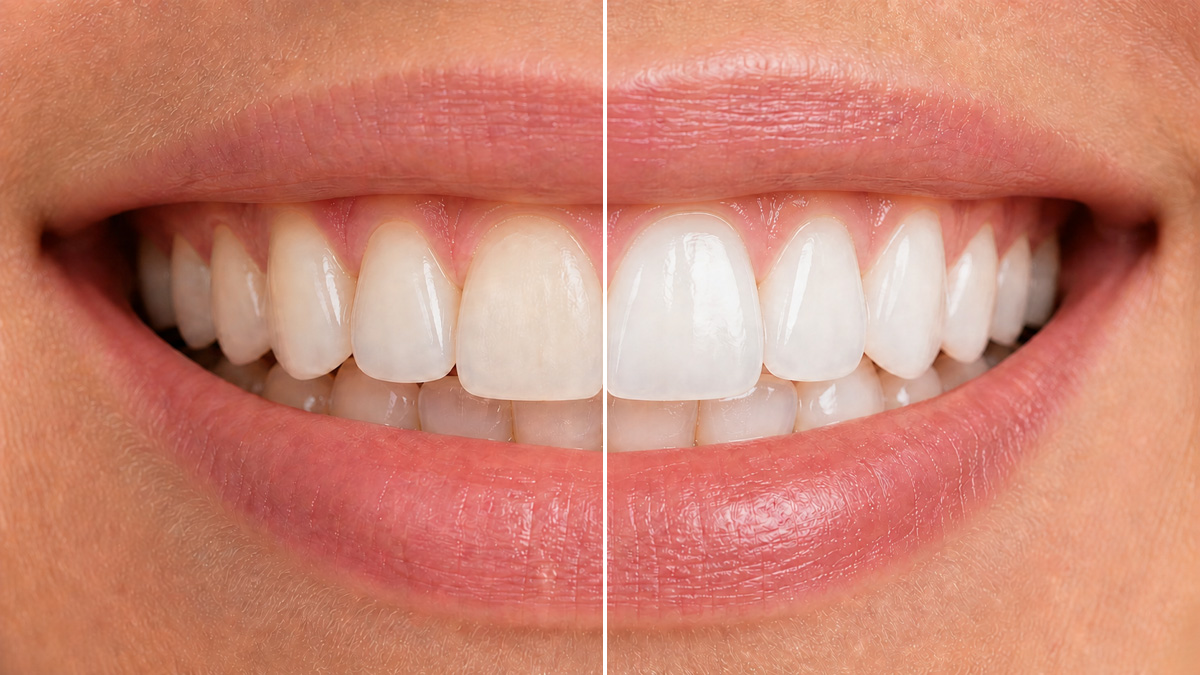
Veneers create the appearance of straighter teeth by adding material where a tooth sits too far back and reducing tooth structure where a tooth sits too far forward. The veneers are then shaped so that the front surfaces line up.
The more a tooth is out of position, the more it may need to be prepared to fit into the new line. A tooth that sits forward in the arch may need considerably more reduction than it would for a purely cosmetic colour change. In some cases, the amount of preparation needed means a crown rather than a veneer becomes the realistic option.
When Veneers May Be Suitable for Crooked Teeth
Veneers are more likely to be considered when the misalignment is mild and cosmetic, and when the bite is healthy. Examples include:
- slight overlapping or crowding of the front teeth
- small rotations that are visible mainly from the front
- uneven tooth lengths or edges
- small gaps combined with minor irregularity
- teeth that also have chips, worn edges or discolouration that veneers would address anyway
In these situations, veneers can improve colour, shape and apparent alignment in one course of treatment. Porcelain options are explained on the Novexdent veneers treatment page.
When Veneers Are Not the Right Choice
Veneers may be unsuitable if you have:
- moderate or severe crowding
- teeth that are significantly rotated or tilted
- a bite problem such as a deep overbite, underbite, crossbite or open bite
- jaw discomfort linked to how your teeth meet
- untreated tooth decay or gum disease
- healthy teeth that would need heavy reduction to be brought into line
Veneers Instead of Braces: Side-by-Side Comparison
Choosing veneers instead of braces is a trade-off between speed and preserving natural tooth structure. The main differences are outlined below.
- What changes: veneers change the visible surface of the teeth, while braces or clear aligners change the actual position of the teeth.
- Effect on bite: veneers have no effect on the bite, whereas braces or aligners can correct many bite problems.
- Treatment time: veneers usually take days to a few weeks. Braces or aligners often take months, sometimes around two years.
- Tooth preparation: veneers often involve removing some enamel, and more for crooked teeth. Braces or aligners involve no enamel removal in most cases.
- Reversibility: veneers are not reversible once enamel is removed. With braces or aligners, the tooth movement is not undone, but no tooth structure is lost.
- Colour and shape: veneers can change the colour and shape of the teeth. Braces or aligners do not, although whitening or bonding can be added.
- Long-term maintenance: veneers may need repair or replacement. After braces or aligners, a retainer is needed to keep the teeth in position.
- Best suited to: veneers suit mild cosmetic irregularity on healthy teeth, while braces or aligners suit crowding, rotation, spacing and bite problems.
Timescales vary widely. Cleveland Clinic notes that orthodontic treatment for malocclusion takes about two years on average, although some people need only a few months.
What Braces and Aligners Do Differently
Braces and clear aligners gradually move the teeth into a new position by applying controlled pressure over time. This can improve both appearance and function, including the way the teeth meet.
According to the NHS guide to braces, fixed braces are commonly worn for one to two years, with adjustments every six to eight weeks, and a retainer is needed afterwards to stop the teeth moving back. Clear aligners are an alternative for many adults, depending on the case.
The main advantage of orthodontic treatment is that it keeps the natural teeth intact. The main disadvantages are the time involved and the commitment to wearing a retainer long term.
The Trade-off: Tooth Preparation
The biggest concern with using veneers for crooked teeth is the amount of healthy tooth structure that may need to be removed. The ADA points out that veneer treatment is not reversible because enamel is removed.
For a straight tooth, veneer preparation may be limited. For a tooth that sits forward or is rotated, the dentist may need to reduce more of the tooth to create a straight outline. Excessive reduction can:
- increase sensitivity
- bring the preparation closer to the nerve
- reduce the amount of enamel available for bonding
- make future treatment more complex
If a tooth needs so much reduction that most of its surface is removed, a crown may be considered instead. A crown covers the whole visible tooth and usually involves more reduction, so it is generally reserved for teeth that also need structural support.
Combining Orthodontics and Veneers
Many dentists suggest a combined approach when teeth are both misaligned and have cosmetic concerns. A short course of aligners or braces can first bring the teeth closer to the ideal position, and veneers can then be placed with less tooth preparation.
This approach may take longer, but it can:
- reduce the amount of enamel that needs to be removed
- improve the bite before cosmetic work begins
- reduce the number of teeth needing veneers
- give a more stable long-term result
In some cases, orthodontic treatment alone, followed by whitening, gives a satisfactory result without any veneers at all.
Straightening Crooked Teeth Without Veneers
Many people can improve crooked teeth without veneers. Options that keep more natural tooth structure include:
- Clear aligners: removable trays that gradually move the teeth, often used for mild to moderate crowding in adults.
- Fixed braces: brackets and wires that can treat a wider range of alignment and bite problems.
- Composite bonding: tooth-coloured resin added to the surface to disguise small irregularities, usually with little or no enamel removal.
- Enamel contouring: minor reshaping of edges to smooth out small unevenness.
- Whitening: brightening the teeth, often after orthodontic treatment, to improve the overall appearance.
Composite bonding is sometimes used for very minor irregularity. It can disguise small chips, uneven edges and slight irregularity, but it cannot correct crowding, rotation or bite problems.
Composite or Porcelain Veneers for Crooked Teeth?
Both composite and porcelain veneers can be used to improve the appearance of mildly crooked teeth. Composite can often be added with less preparation and is easier to repair, but it is less resistant to staining and wear. Porcelain is more colour-stable but usually requires more preparation and laboratory work.
The right material depends on how much change is needed and the condition of the teeth. A dentist can explain which material suits your teeth after an assessment.
What a Dentist Will Assess
Before recommending veneers for crooked teeth, a dentist will usually assess:
- the position, rotation and angle of each tooth
- how the upper and lower teeth meet
- signs of grinding, clenching or excessive wear
- gum health and the gum line
- existing fillings, crowns or decay
- how much tooth structure veneers would require
- whether orthodontic treatment would give a better or more conservative result
Photographs, X-rays and digital scans may be used. A responsible plan should explain the orthodontic alternative, even if you ultimately choose veneers.
Frequently Asked Questions
Can veneers fix crooked teeth permanently?
Veneers can permanently change how crooked teeth look, but the teeth themselves are not moved. The veneers may also need repair or replacement in future.
Are veneers cheaper than braces?
It depends on the number of veneers and the type of orthodontic treatment. Veneers are charged per tooth and may need replacing over time, whereas orthodontic treatment is a single course followed by retainer care.
Is it faster to get veneers instead of braces?
Yes, veneers are usually completed in days or a few weeks, while orthodontic treatment typically takes months. Speed should be weighed against the tooth preparation involved.
Can you get veneers on crooked bottom teeth?
Veneers can sometimes be placed on lower teeth, but lower front teeth are small and often crowded, so orthodontic treatment is frequently more suitable. A dentist would need to assess the bite and available space.
Can veneers fix an overbite?
No, veneers do not correct an overbite or other bite problems. A deep overbite may also make veneers more likely to chip or fail.
Can I have veneers for crooked teeth in Turkey?
Veneers are widely offered in Turkey, but the same clinical principles apply wherever you are treated. If you are considering treatment abroad, ask how much tooth preparation is planned, whether orthodontic treatment has been considered and how aftercare will be handled once you return home.
Deciding Between Veneers and Braces
Veneers for crooked teeth can be a practical cosmetic option when the misalignment is mild, the bite is healthy and the teeth would benefit from changes in shape or colour as well. They are not a substitute for orthodontic treatment when teeth are significantly out of line or the bite is affected.
If you are unsure which approach fits your teeth, a clinical assessment can clarify how much preparation veneers would need, whether braces or aligners could achieve a better result and whether a combination would be the most conservative choice. If you are considering treatment in Turkey, you can find out more about Novexdent and request a consultation through the Novexdent.
LATEST ARTICLES
Beyond the Smile