Dental Implants Before and After: Results, Healing and Timeline
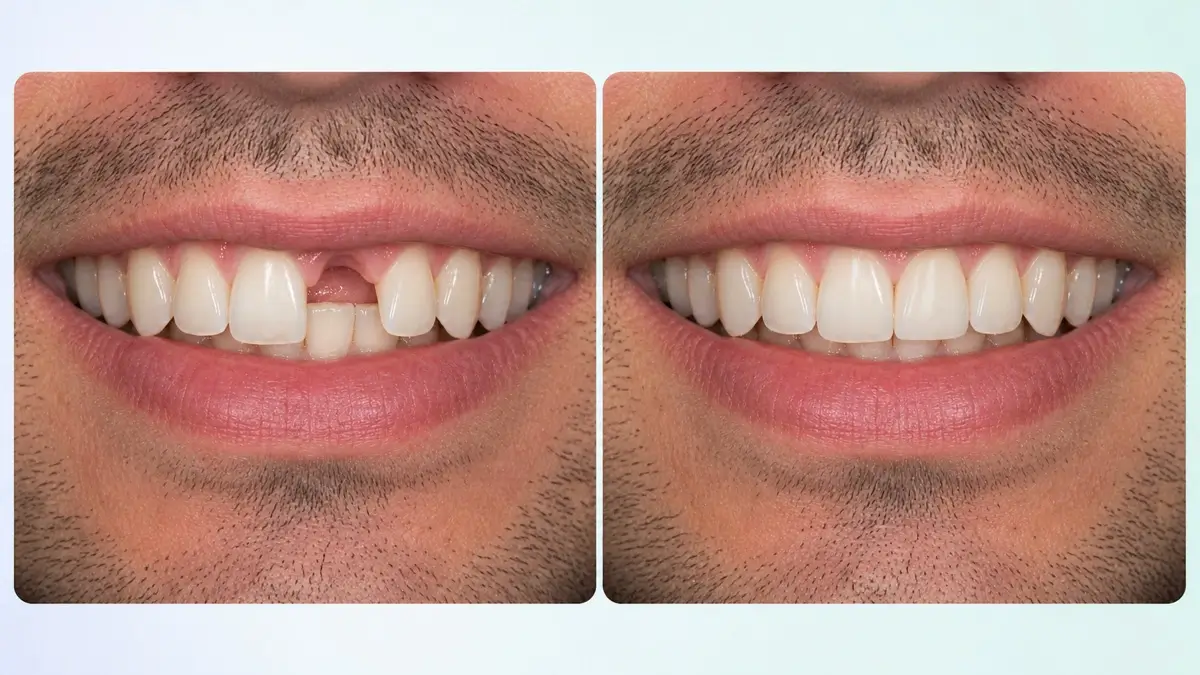
Dental implants before and after results typically show a gap or failing tooth replaced by a fixed, natural-looking tooth that is anchored in the jawbone. Beyond appearance, implants can restore the ability to chew and speak comfortably and help preserve bone where a tooth has been lost.
The change does not happen in a single appointment. Implant treatment usually involves surgery, a healing period of several months while the implant fuses with the bone, and then the fitting of the final crown, bridge or denture.
This guide explains what realistic implant results look like, what happens at each healing stage, how long treatment takes and which factors shape the final outcome.
What Changes After Dental Implant Treatment?
Dental implants replace the root of a missing tooth with a small post, usually made of titanium, which then supports an artificial tooth. The main differences before and after treatment are summarised below.
- Appearance: before treatment, there may be a visible gap, a damaged tooth or a removable replacement. After treatment, in successful cases, there is a fixed tooth designed to match the neighbouring teeth.
- Chewing: difficulty biting or chewing on one side is common before treatment. Chewing function is restored in most cases.
- Speech: gaps or loose dentures can affect speech. Stable teeth can make speech feel more natural.
- Neighbouring teeth: teeth may drift into the gap over time. The implant fills the space and supports the arch.
- Jawbone: bone gradually shrinks where a tooth is missing. An implant can help preserve bone in that area.
- Daily routine: removable appliances may need taking out. Implants are cleaned in place like natural teeth.
Dental Implants Before and After: What Results Are Realistic?
A realistic implant result is a tooth, or set of teeth, that looks natural in the context of your smile and functions well. It is not always identical to the original tooth, and results vary from person to person.
[Insert Novexdent dental implant before-and-after case here]
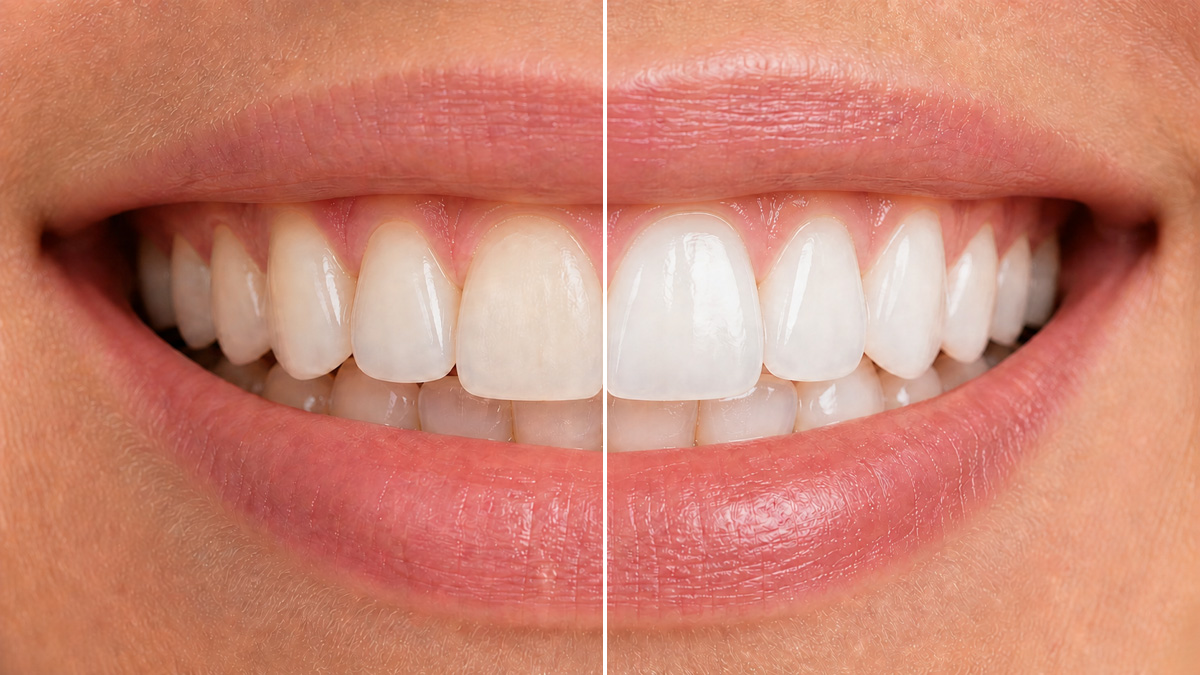
Before-and-after photographs are useful for seeing what implant treatment can achieve, but each image represents one patient's circumstances. Your outcome will depend on your starting condition, bone and gum health, bite, the type of restoration and how the treatment is planned.
Single Tooth Implant Before and After
A single tooth implant before and after comparison usually shows one gap filled with a crown that blends with the surrounding teeth. The neighbouring teeth do not need to be cut down, as they would for a conventional bridge.
The most natural-looking single implants are often those where:
- there is enough bone to place the implant in an ideal position
- the gum around the implant has a healthy, even outline
- the crown shade, shape and surface texture match the adjacent teeth
- the bite has been checked so the crown is not overloaded
Front teeth are more demanding than back teeth, because small differences in gum level or colour are more visible when you smile.
Multiple Teeth and Full-Arch Implants Before and After
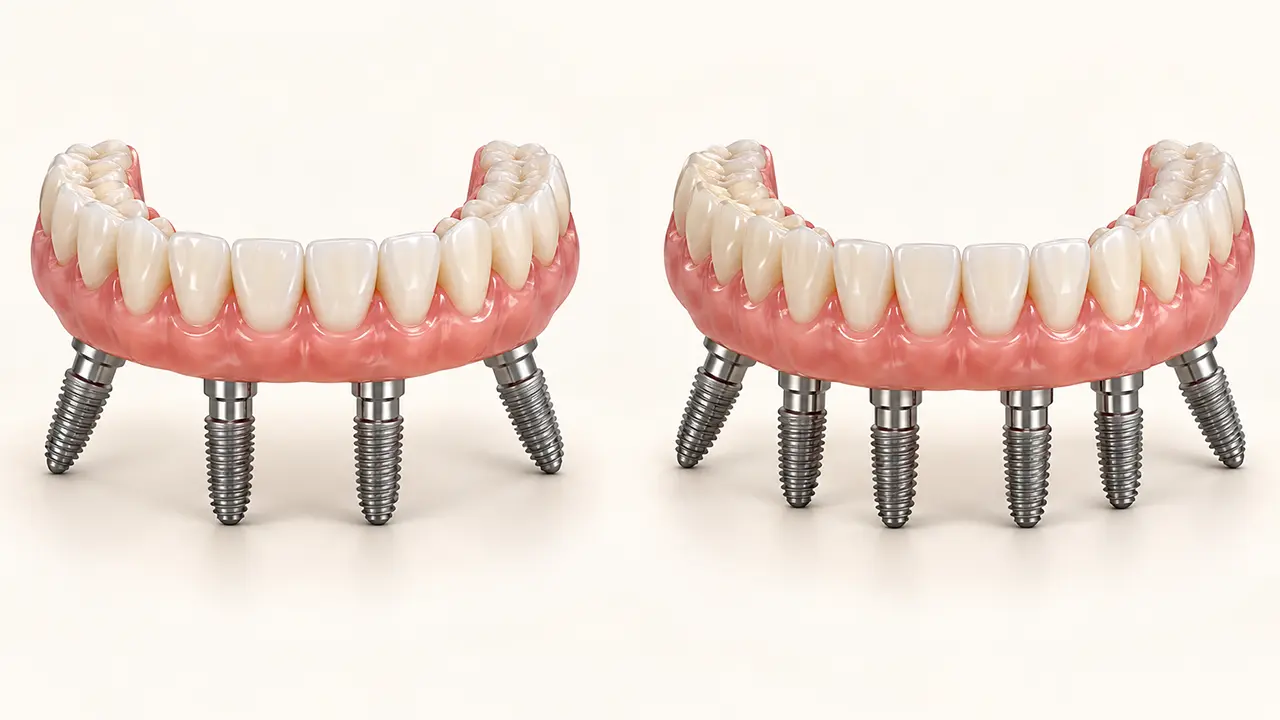
Where several teeth or a whole arch are missing, implants can support bridges or full-arch restorations rather than individual crowns. The before and after dental implants change in these cases is often more dramatic, replacing dentures or failing teeth with a fixed set of teeth.
Full-arch results depend heavily on the design of the prosthesis, the position of the implants and the bone available. Options such as All-on-4 or six to eight implants per jaw are chosen according to bone condition, bite and treatment goals.
Dental Implant Healing Pictures: What Each Stage Looks Like
Dental implant healing pictures often show the site at different points, from immediately after surgery to the final crown. Knowing what is normal at each stage can help you understand the process.
Day of surgery
The implant is placed under local anaesthetic. The gum may be stitched, and in some cases a small healing cap is visible above the gum. Temporary teeth may be fitted in suitable cases, particularly at the front of the mouth or in full-arch treatment.
First week
Some swelling, bruising and tenderness are normal. Cleveland Clinic notes that the first round of healing takes about one week, and most people feel like themselves within a week or so.
First few weeks
The gum closes over or around the implant and looks less red and swollen. Stitches, if used, are removed or dissolve.
Osseointegration
Over the following months, the bone grows around the implant surface. This process, called osseointegration, is what makes the implant stable. Cleveland Clinic states that it can take anywhere from three to nine months, depending on how quickly the body heals. The site may look settled on the surface long before the bone has fully integrated.
Abutment and final crown
Once the implant is stable, a connector called an abutment is attached and the final crown, bridge or denture is fitted. The bite and appearance are checked and adjusted.
Typical Implant Treatment Timeline
Implant treatment is commonly completed in two main stages, with a healing period between them. The timeline varies with bone condition, the number of implants and whether additional procedures are needed.
- Assessment, before surgery: examination, X-rays and a 3D scan are carried out, and the treatment plan is agreed.
- Implant placement, first visit: the implant is placed, and a temporary tooth is fitted where suitable.
- Healing, around 3 to 6 months and sometimes longer: the bone integrates with the implant.
- Final restoration, second visit: the abutment and permanent crown or bridge are fitted.
At Novexdent, the first visit for implant placement typically lasts three to five days. Patients then return home for a healing period of around three to six months before a second visit of around five to seven days to fit the permanent crown. In specific cases with sufficient bone, immediate loading may be considered, but it depends on implant stability and cannot be confirmed before assessment.
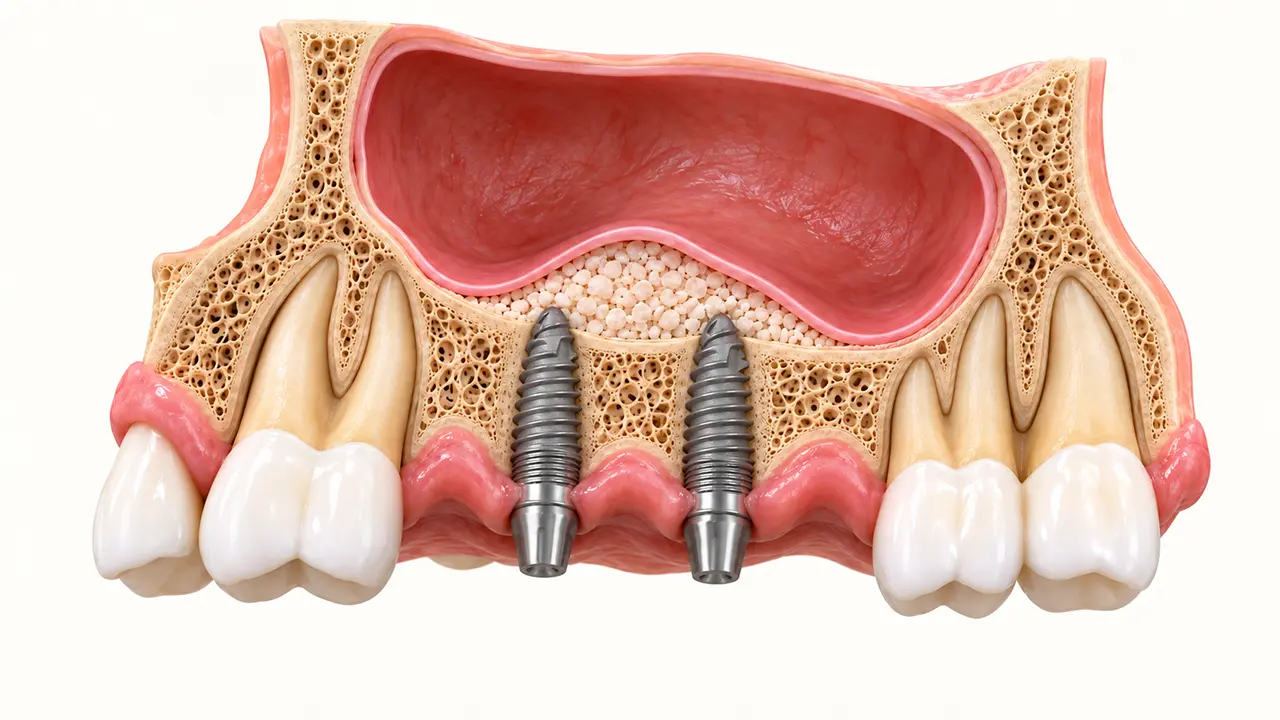
If a bone graft is needed first, the timeline is usually longer. A graft may be placed at the same time as the implant in some cases, while larger grafts usually need at least three months to heal before the implant is placed.
What Affects Dental Implant Results?
Implant results depend on a combination of clinical, biological and personal factors. The most important include:
- Bone volume and quality: enough healthy bone is needed to hold the implant securely and support the gum.
- Gum health: healthy gums help create a natural contour around the crown.
- Bite and jaw position: heavy or uneven bite forces can affect the implant and crown over time.
- Position of the missing tooth: front teeth have higher aesthetic demands than back teeth.
- General health: conditions such as uncontrolled diabetes can affect healing.
- Smoking and vaping: both can slow healing and increase the risk of complications.
- Implant planning: 3D imaging and careful positioning influence both function and appearance.
- Crown design: shade, shape and surface texture determine how well the tooth blends in.
- Healing and aftercare: following instructions during recovery supports integration.
- Long-term maintenance: daily cleaning and regular check-ups help protect the implant.
The American Dental Association notes that chronic illnesses such as diabetes may interfere with healing, and tobacco use can slow healing, which is why a full medical history is reviewed before treatment.
How to Judge Implant Before and After Photos
Before and after photos can be helpful, but they should be viewed carefully. When reviewing implant results, consider:
- whether the photos show the same lighting, angle and distance
- whether close-up images of the gum line are included, not just the full smile
- how long after treatment the "after" photo was taken
- whether the case is similar to yours, such as a single tooth or a full arch
- whether X-rays or information about the treatment are provided
Photos showing one excellent result do not mean every patient will achieve the same outcome.
How Long Do Implant Results Last?
Dental implants can last many years, and in some cases a lifetime, with good care. However, there is no guaranteed lifespan, and the crown or bridge on top may need replacing sooner than the implant itself.
Cleveland Clinic notes that most crowns and bridges on implants last around 15 years, although this varies.
Long-term implant results can be affected by:
- gum inflammation around the implant, known as peri-implantitis
- grinding or clenching
- smoking
- poor oral hygiene
- missed dental check-ups
Limitations and Risks
Implant surgery is a well-established treatment, but like any surgery it carries some risks. These may include:
- infection at the implant site
- failure of the implant to integrate with the bone
- nerve irritation, causing temporary or, rarely, lasting numbness
- sinus problems with some upper-jaw implants
- gum recession around the implant, which can affect appearance
- the need for additional procedures such as bone grafting
These risks are why careful assessment, planning and follow-up matter.
Who May Be Suitable for Dental Implants?
Dental implants may be suitable for adults who have one or more missing teeth, have finished growing and have enough healthy bone, or can have bone rebuilt. General health matters more than age.
Implants may need more careful planning, or may not be recommended, for people with:
- uncontrolled diabetes or certain other medical conditions
- a history of radiotherapy to the jaw
- active gum disease that has not been treated
- heavy smoking
- certain medications that affect bone healing
A dentist can confirm whether you are a candidate after reviewing your medical history, examining your mouth and assessing your bone with imaging.
Frequently Asked Questions
How long does it take to see the final implant result?
The final result is usually seen after the permanent crown is fitted, commonly three to six months after implant placement, and longer if bone grafting is needed.
Do dental implants look like real teeth?
A well-planned implant crown can look very similar to a natural tooth. The result depends on bone and gum support, the position of the tooth and the crown design.
Will I have a gap while the implant heals?
Not necessarily. A temporary tooth can often be provided while the implant heals, particularly at the front of the mouth. Your dentist will explain the options for your case.
Is dental implant surgery painful?
The procedure is carried out under local anaesthetic, so you should not feel pain during surgery. Some discomfort and swelling afterwards are common and usually settle within a week or so.
Can implant results fail?
Yes, a small number of implants do not integrate or develop problems later. Smoking, gum disease, poor hygiene and some medical conditions can increase the risk.
Planning Dental Implant Treatment
Dental implants before and after results can show a significant improvement in appearance and function, but the outcome always depends on the individual case. Bone, gum health, bite, general health, planning and aftercare all shape what is achievable.
An assessment with X-rays and a 3D scan is the first step to understanding which type of implant treatment fits your needs, whether any supporting procedures are required and how long treatment will take. You can read more about how treatment is planned on the dental implants, and current starting prices are shown on the Novexdent, with final costs confirmed after an individual assessment.
LATEST ARTICLES
Beyond the Smile