Dental Bone Graft for Implants: Procedure, Healing and Cost

A dental bone graft is a procedure that adds bone or bone-substitute material to the jaw where bone has been lost, so there is enough volume and density to support a dental implant. It is commonly needed after tooth loss, gum disease or injury, when the jawbone has shrunk.
Bone graft dental treatment can be a small procedure carried out at the same time as implant placement, or a separate stage that needs several months to heal before the implant is placed. The type of graft, the size of the area and the timing all influence the dental bone graft cost and the overall treatment timeline.
This guide explains why bone grafting for implants may be needed, the main types of graft, what the procedure and healing involve, and what affects the price.
What Is a Dental Bone Graft?
A dental bone graft replaces missing or thin bone in the jaw. The graft material acts as a scaffold that the body gradually replaces with its own new bone.
The goal is not simply to add bone, but to create a stable foundation in the right position for an implant and the crown it will support.
Why Bone Density Matters for Dental Implants
Adequate bone density for dental implants is essential because the implant needs to be surrounded by healthy bone to become stable. After placement, the bone grows around the implant surface in a process called osseointegration.
If the bone is too thin, too short or too soft, the implant may not achieve good initial stability, may be placed in a compromised position or may be at higher risk of problems over time. Bone volume also affects how natural the final crown looks, because the gum follows the shape of the bone underneath.
Before implant surgery, bone is usually assessed with X-rays and a 3D scan, often called a CBCT scan. This shows the height, width and density of the bone, as well as the position of nerves and the sinuses.
Do You Need a Bone Graft for Implants?
You may need bone grafting for implants if the jaw has lost volume where the implant will be placed. Common reasons include:
- a tooth that was extracted or lost some time ago
- advanced gum disease that caused bone loss
- infection around a tooth or previous restoration
- dental trauma or injury to the jaw
- long-term denture wear, which can contribute to gradual bone loss
- an enlarged sinus in the upper back jaw, leaving little bone height
Not everyone needs a graft. Some patients have enough bone for an implant without any additional procedure, and others need only a small amount of graft material placed at the time of surgery. The need for a graft can only be confirmed after a clinical examination and imaging.
Types of Dental Bone Graft Material
Bone graft material can come from your own body, a human donor, an animal source or a synthetic source. Each has advantages and limitations.
- Autograft: your own bone, often taken from another part of the jaw. It contains living cells, but requires a second surgical site.
- Allograft: processed human donor bone from a licensed tissue bank. It avoids a second surgical site and is widely used.
- Xenograft: processed animal bone, usually bovine or porcine. It resorbs slowly, helping to maintain volume.
- Alloplast: synthetic material such as hydroxyapatite. It is lab-made, so no donor tissue is involved.
The choice depends on the size and shape of the defect, where it is in the mouth and the clinician's assessment. Grafts are often covered with a protective membrane to help the area heal.
Types of Bone Grafting Procedures
Different procedures are used depending on where bone is missing and how much is needed.
Socket preservation
Socket preservation places graft material into a tooth socket immediately after extraction. It aims to reduce the natural shrinkage that follows tooth loss and to preserve bone for a future implant.
Ridge augmentation
Ridge augmentation rebuilds the width or height of the jaw ridge where bone has already been lost. The American Academy of Periodontology explains ridge modification as a way to correct deformities in the jaw so implants can be placed.
Sinus bone graft
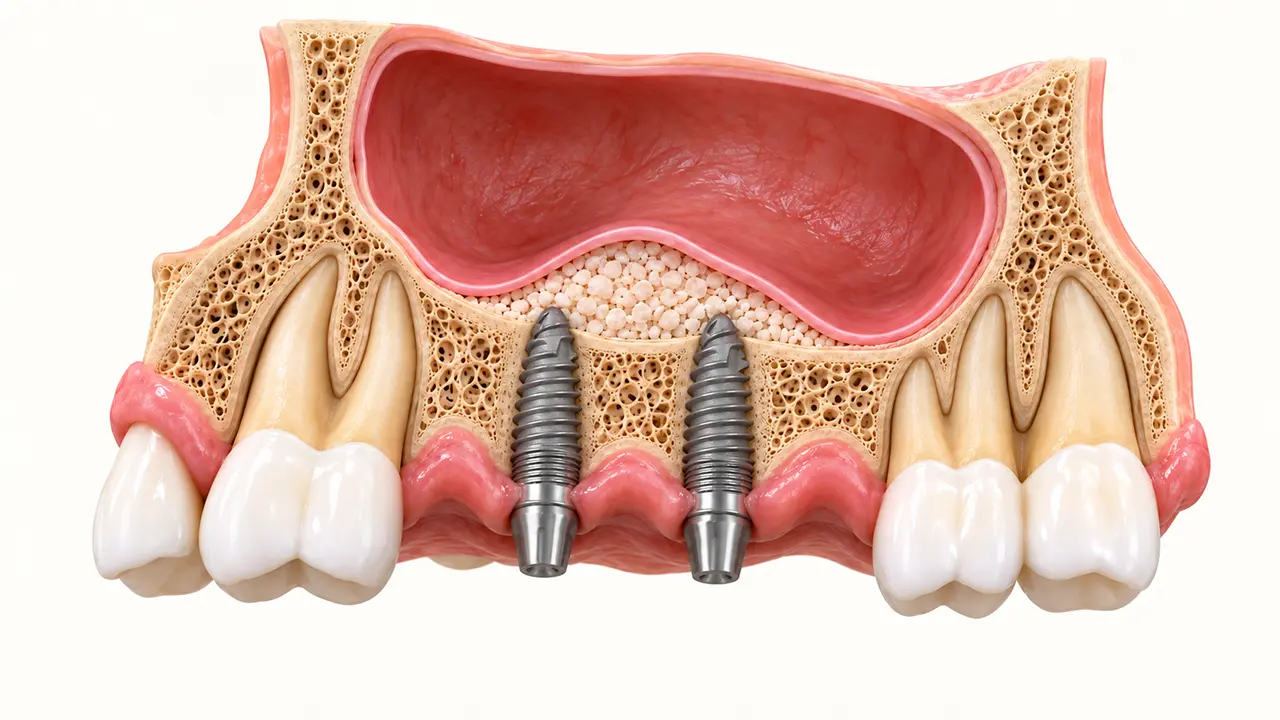
A sinus bone graft, often called a sinus lift, adds bone beneath the floor of the maxillary sinus in the upper back jaw. It may be needed when bone height is reduced there, which is common after back teeth are lost. The American Academy of Periodontology's overview of sinus augmentation explains how the sinus floor is raised and bone graft material is placed underneath. Depending on the case, the bone may be left to develop for four to 12 months before implants are placed, although the implant can sometimes be placed at the same time.
Block grafts
For larger defects, a block of bone may be secured to the jaw. This is a more extensive procedure and usually requires a longer healing period before implants are placed.
What Happens During a Dental Bone Graft Procedure?
A dental bone graft is usually carried out under local anaesthetic, with sedation available in some clinics. The general steps are:
- Assessment and planning: the area is evaluated with X-rays or a 3D scan.
- Anaesthesia: the area is numbed.
- Access: the gum is gently moved aside to expose the bone.
- Graft placement: the graft material is placed where bone is missing.
- Membrane: a protective membrane may be placed over the graft.
- Closure: the gum is stitched back into place.
Cleveland Clinic notes that most people report little to no pain, although tenderness, swelling and bruising are normal in the first week or two.
Is the Graft Placed at the Same Time as the Implant?
A bone graft can be placed at the same time as the implant in some cases, or as a separate stage months beforehand in others. The choice depends on how much bone is missing and whether the implant can be held securely at the time of surgery.
- Simultaneous grafting: used when a small amount of bone is missing and the implant is still stable on placement.
- Staged grafting: used when more bone is needed, so the graft heals first and the implant is placed later.
Staged treatment adds time, but it may give a more predictable foundation where bone loss is significant.
Dental Bone Graft Healing and Recovery
Initial recovery after a dental bone graft usually takes about a week, but the graft itself needs months to mature. According to Cleveland Clinic, a graft needs at least three months to heal, and a large graft may take nine to 12 months.
During early recovery, you may be advised to:
- apply cold packs to reduce swelling
- eat soft foods and avoid chewing on the graft site
- avoid smoking, which can affect healing
- avoid strenuous exercise for the first few days
- take any medication as prescribed
- attend follow-up appointments
It is common to notice small granules of graft material in the mouth in the first few days. Worsening pain or swelling after the first week, discharge from the site or a fever should be reported to your dentist.
Once the graft has healed, Cleveland Clinic advises that the implant is ideally placed within six to 12 months, as unused graft bone can start to shrink.
Dental Bone Graft Cost: What Affects the Price?
Dental bone graft cost varies widely because the procedure ranges from a small amount of material placed during implant surgery to a separate operation involving a large area. It is usually quoted as part of the overall implant plan.
- Size of the area: larger defects need more material and more surgical time.
- Type of graft material: different materials and membranes have different costs.
- Type of procedure: socket preservation is usually simpler than ridge augmentation, block grafts or a sinus lift.
- Timing: a separate grafting stage may add appointments, travel and a longer timeline.
- Number of sites: grafting in several areas increases the overall cost.
- Imaging and planning: 3D scans and surgical planning may be priced separately in some clinics.
- Sedation: sedation, if requested or needed, may add to the fee.
- Location: prices differ between countries and between clinics.
Dental bone graft cost in Turkey
Bone grafting in Turkey is usually priced as a supporting procedure within an implant plan rather than as a fixed standalone price. At Novexdent, dental implants currently start from €500 per implant, and Novexdent notes that bone grafting or a sinus lift, where needed, will affect the total cost. The final cost is confirmed after a clinical assessment. The implant package includes 3D scanning and surgical planning, a Straumann or other top-tier implant and a custom-made crown, as outlined on the dental implants page.
Why implant quotes can differ
Two patients having the same number of implants may receive different quotes because their bone condition differs. When comparing prices, ask whether grafting is included, what type of graft is planned and whether a separate stage or trip will be needed. For patients considering several implants or a full arch, grafting needs can differ from one area of the jaw to another, so each site should be assessed individually.
Risks and Possible Complications
Bone grafting is generally considered safe, but as with any surgery it carries some risks. These can include:
- infection at the graft site
- swelling, bruising and discomfort
- exposure of the graft or membrane through the gum
- partial or complete failure of the graft to integrate
- temporary numbness if nearby nerves are affected
- sinus problems after a sinus graft
Smoking, uncontrolled diabetes and certain medications can increase the risk of complications. Your full medical history should be reviewed before treatment.
Are There Alternatives to Bone Grafting?
In some cases, implants can be planned to avoid or reduce the need for grafting. Depending on the clinical assessment, alternatives may include:
- shorter or narrower implants where the bone allows
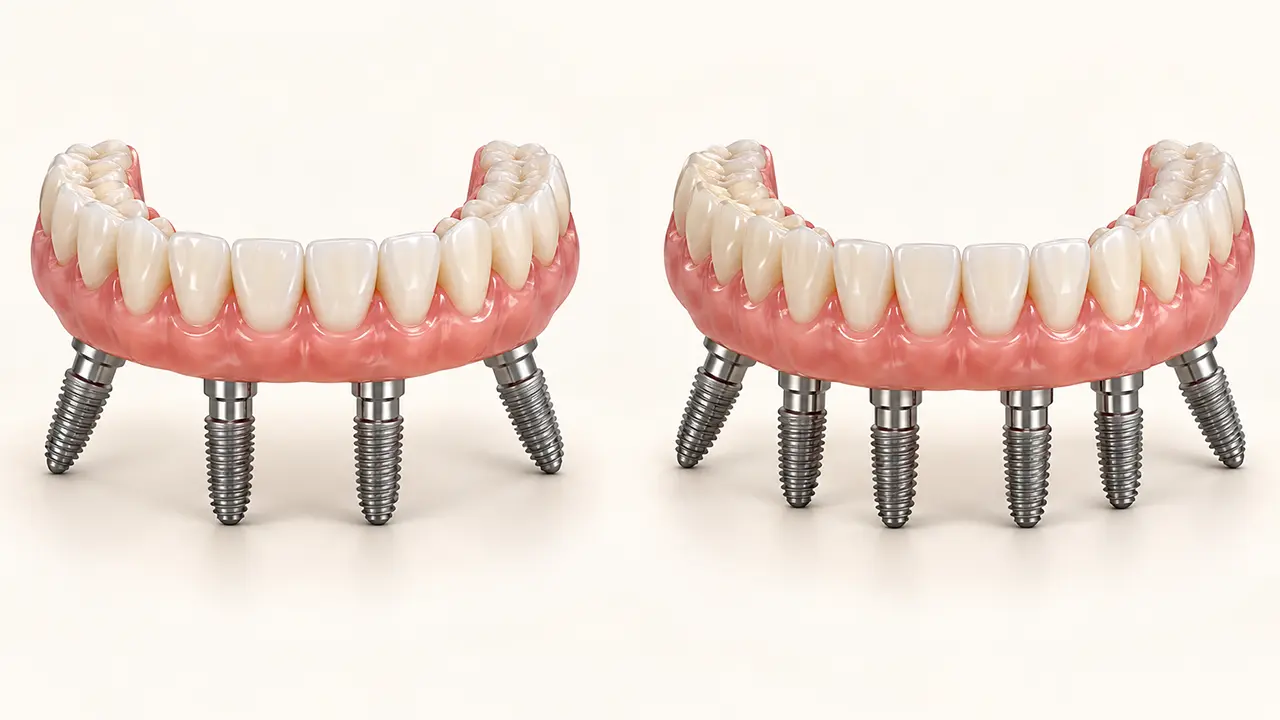
- angled implant placement to use the available bone, as used in some full-arch techniques such as All-on-4
- a conventional bridge supported by neighbouring teeth
- a removable denture or implant-supported denture
Each alternative has its own advantages and limitations, and not every option is suitable for every patient.
Frequently Asked Questions
Is a dental bone graft painful?
A dental bone graft is performed under local anaesthetic, so you should not feel pain during the procedure. Tenderness and swelling afterwards are common and usually settle within one to two weeks.
How long after a bone graft can I get an implant?
It depends on the size of the graft. Small grafts may allow the implant to be placed at the same time, while larger grafts usually need at least three months and sometimes nine to 12 months to heal.
Can I have a bone graft and implant on the same day?
Yes, in suitable cases where only a small amount of bone is missing and the implant can be held securely at placement.
How do I know if I have enough bone for implants?
Bone volume is assessed with X-rays and a 3D scan. A dentist can then advise whether grafting is needed.
Does a sinus bone graft cost more than a standard graft?
A sinus bone graft is usually a more involved procedure than a small graft placed at the time of implant surgery, so it can add more to the overall cost. The exact difference depends on the approach and amount of bone needed.
Planning Implant Treatment When Bone Is Limited
A dental bone graft can make implant treatment possible for people who have lost bone in the jaw, but it adds time, cost and another stage of healing. Whether you need one, and which type, can only be decided after an examination and a 3D scan.
When planning implant treatment, ask for a clear explanation of your bone condition, whether grafting is needed, whether it will be done at the same time as the implant or separately, and how it affects the total cost and timeline. If you are considering implant treatment in Turkey, you can learn more about Novexdent and request an assessment through the Novexdent.
LATEST ARTICLES
Beyond the Smile